Repetitive inquiry work
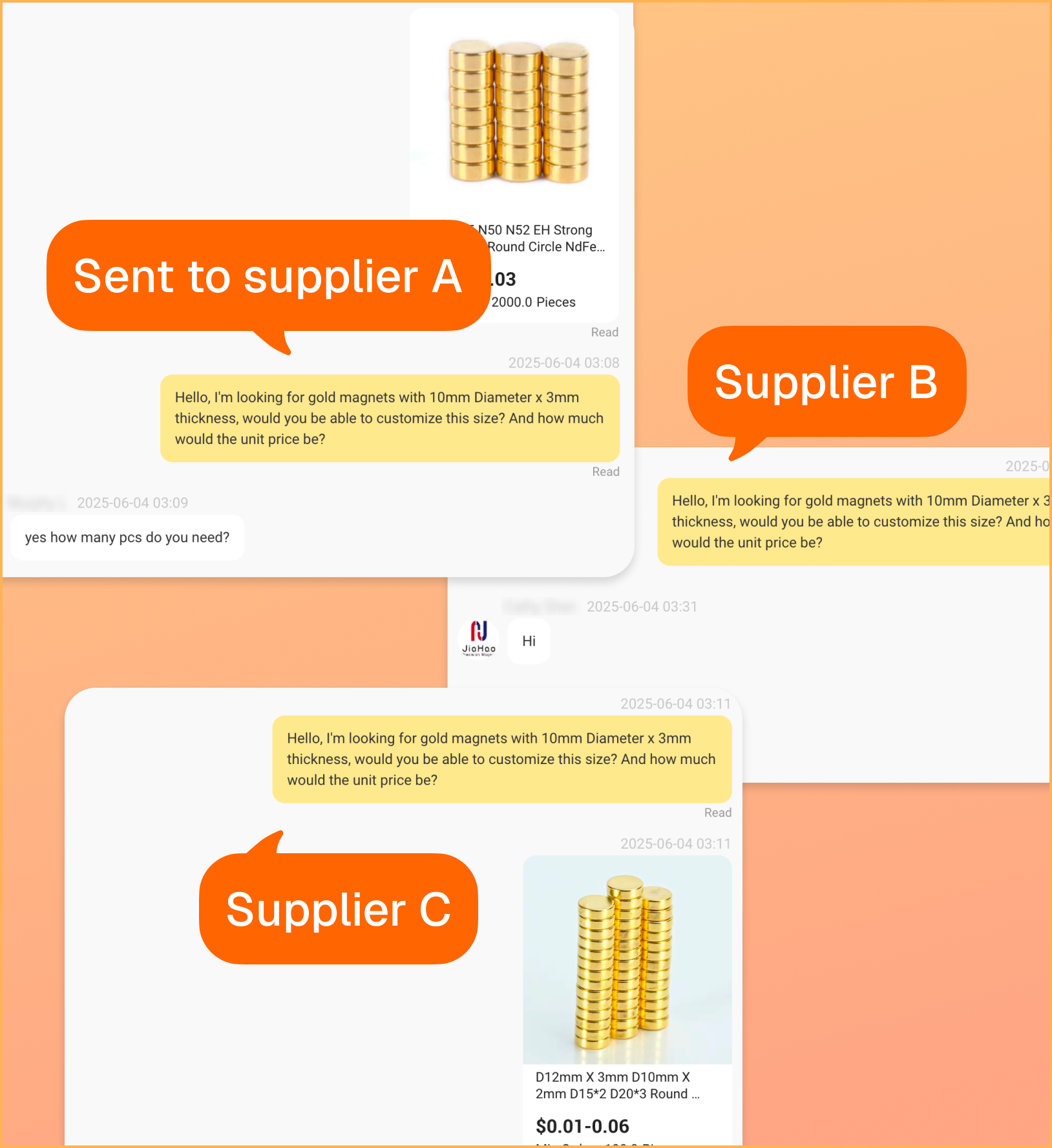
Buyers repeatedly copy the same requirements into multiple supplier conversations.
 Yiran Wang
Alibaba.comGlobal B2B marketplaceHanded off2025
Overview
On Alibaba.com, a global B2B marketplace, buyers often screen products by contacting and comparing multiple suppliers. Repetitive inquiries and inefficient communication can slow their progress toward a transaction.
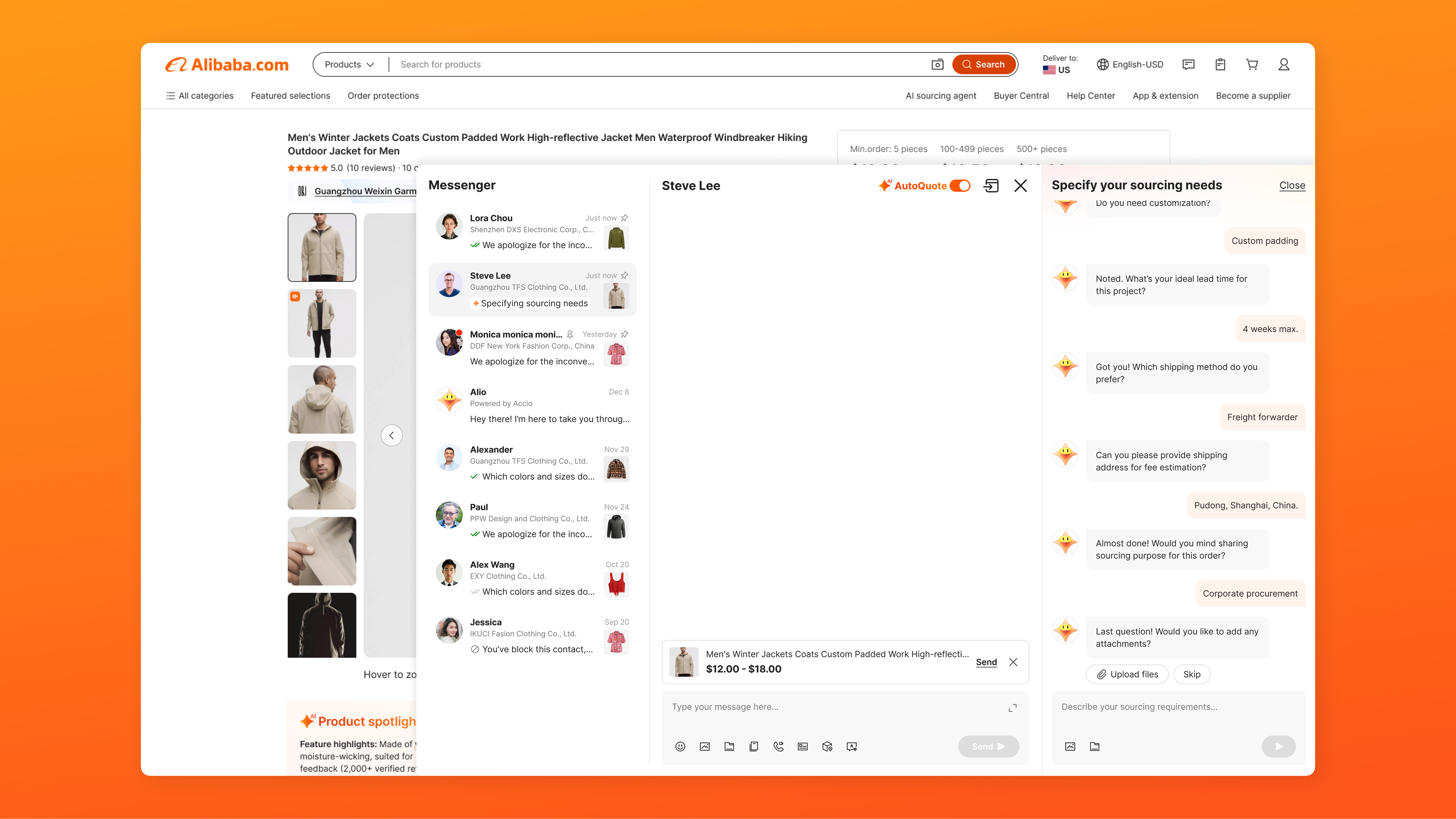
As the UX designer responsible for the Product Detail Page, I helped shape AutoQuote AI sourcing assistant from 0 to 1 with the team. It enables buyers to contact multiple suppliers in one action, collect answers to key sourcing questions, and track progress across sourcing projects.
Working with designers and product managers across the buyer journey, I uncovered a deeper mismatch in the proposed interaction and helped reframe how AI could enter the experience more naturally and with a lower user learning curve.
Business impact
Post-launch data showed a double-digit reduction in average buyer communication time and a double-digit relative increase in the Chat-to-Order Conversion Rate (CVR).* Additionally, optimizing the entry points on the Product Detail Page successfully boosted the PDP-to-Chat Click-Through Rate (CTR).
*Exact figures are confidential.
Process starts here
Problem
Buyer and supplier communication plays an important role in moving sourcing intent toward a transaction. However, early product screening creates heavy coordination. Buyers repeat the same requirements across inquiries, clarify details over several rounds, and communicate across time zones, languages, and business contexts.
The business team spotted an opportunity to utilize conversational AI agent to help buyers express their needs to multiple suppliers with lower effort and talk to suppliers on their behalf. The question is, how to implement this AI agent tool on this well-established platform?

Buyers repeatedly copy the same requirements into multiple supplier conversations.
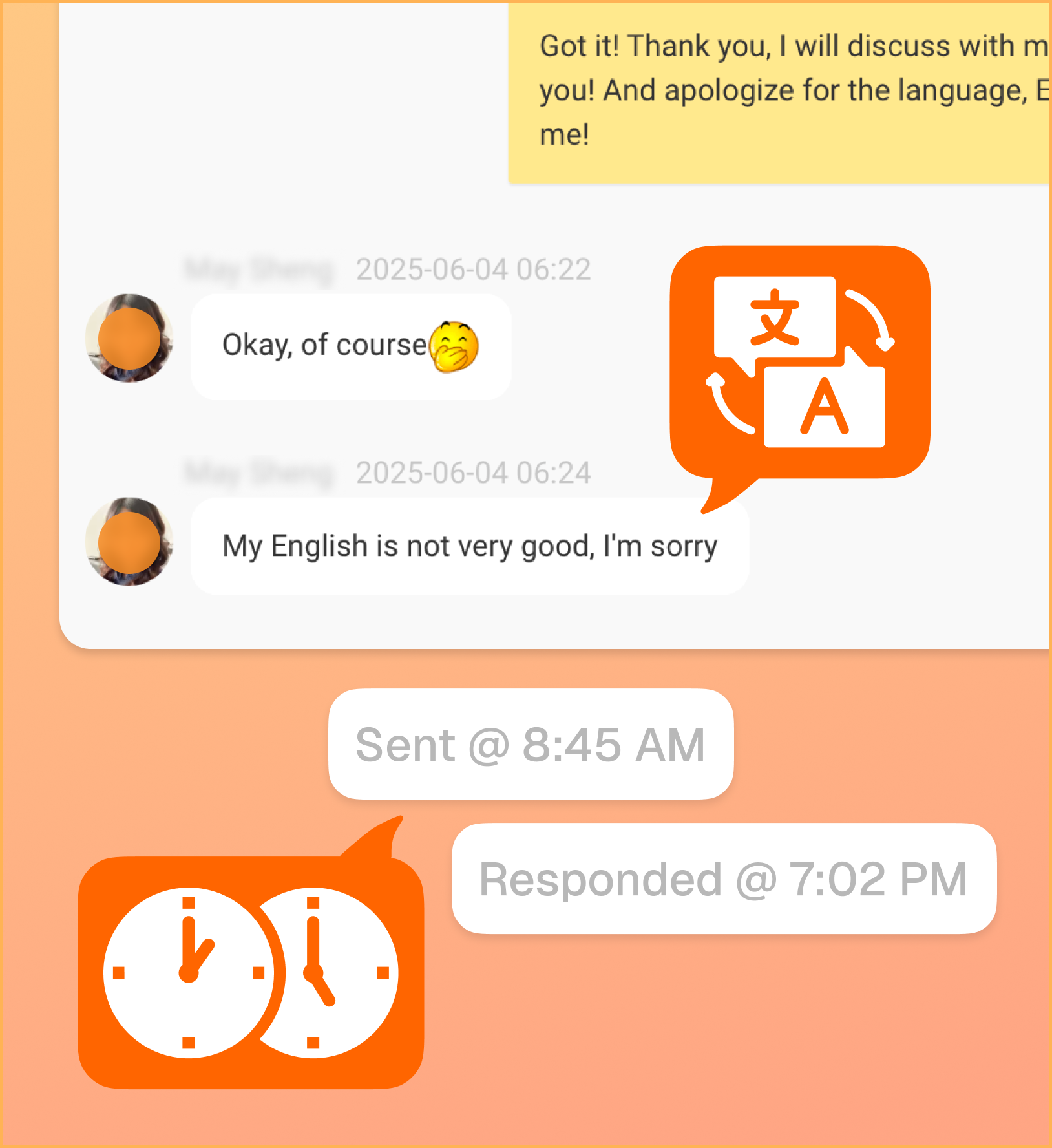
Time zones, language differences, and missing details can extend each exchange.
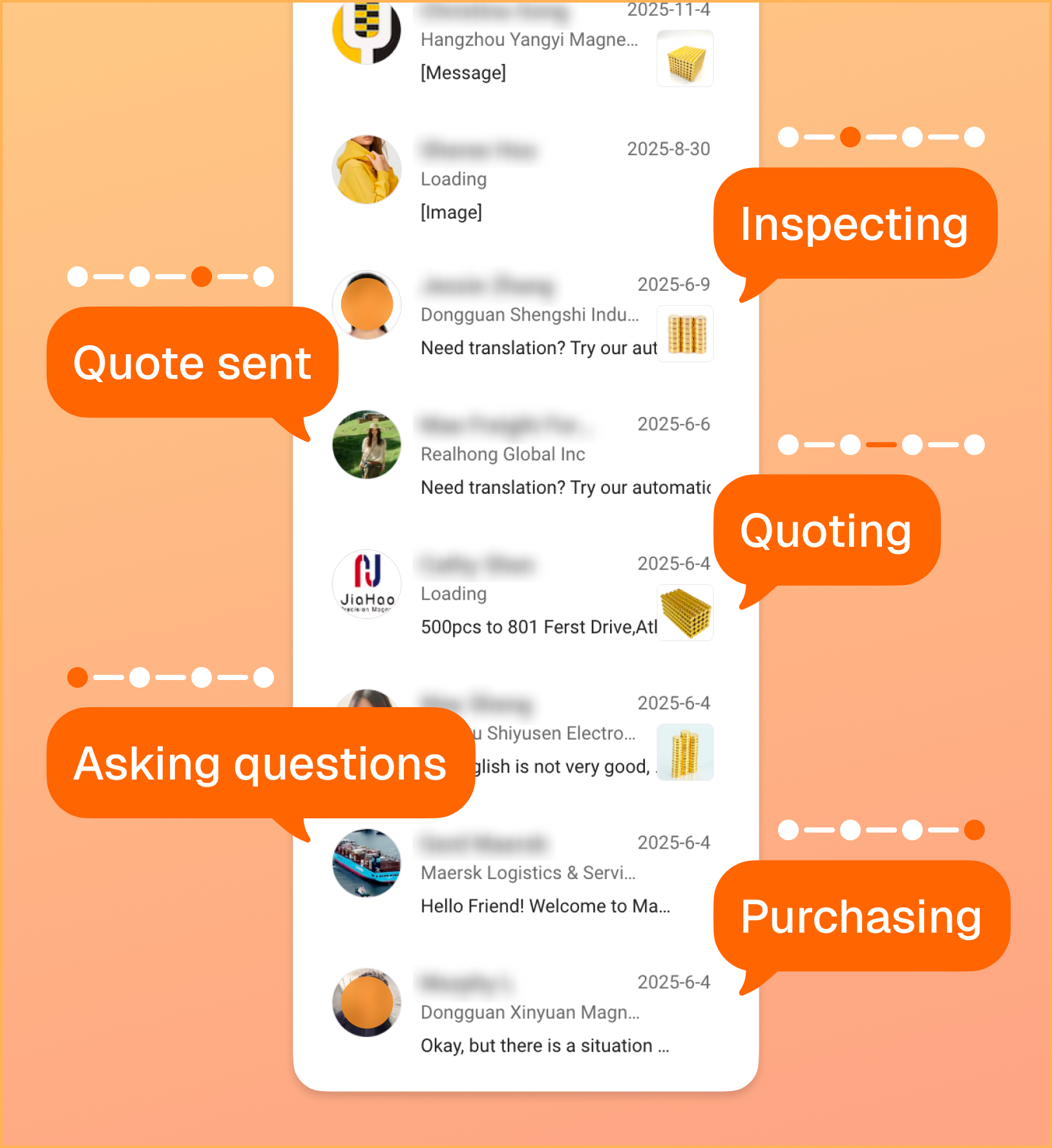
Comparing suppliers becomes harder when requirements and updates live across separate conversations.
Entering the project
Designers responsible for Shopping Discovery Page had already created an entry that lets buyers activate AutoQuote, add multiple products to the bulk quote selection tray, and have the assistant send inquiries on their behalf. As the next step in that journey, the Product Detail Page needed to carry the same capability forward.
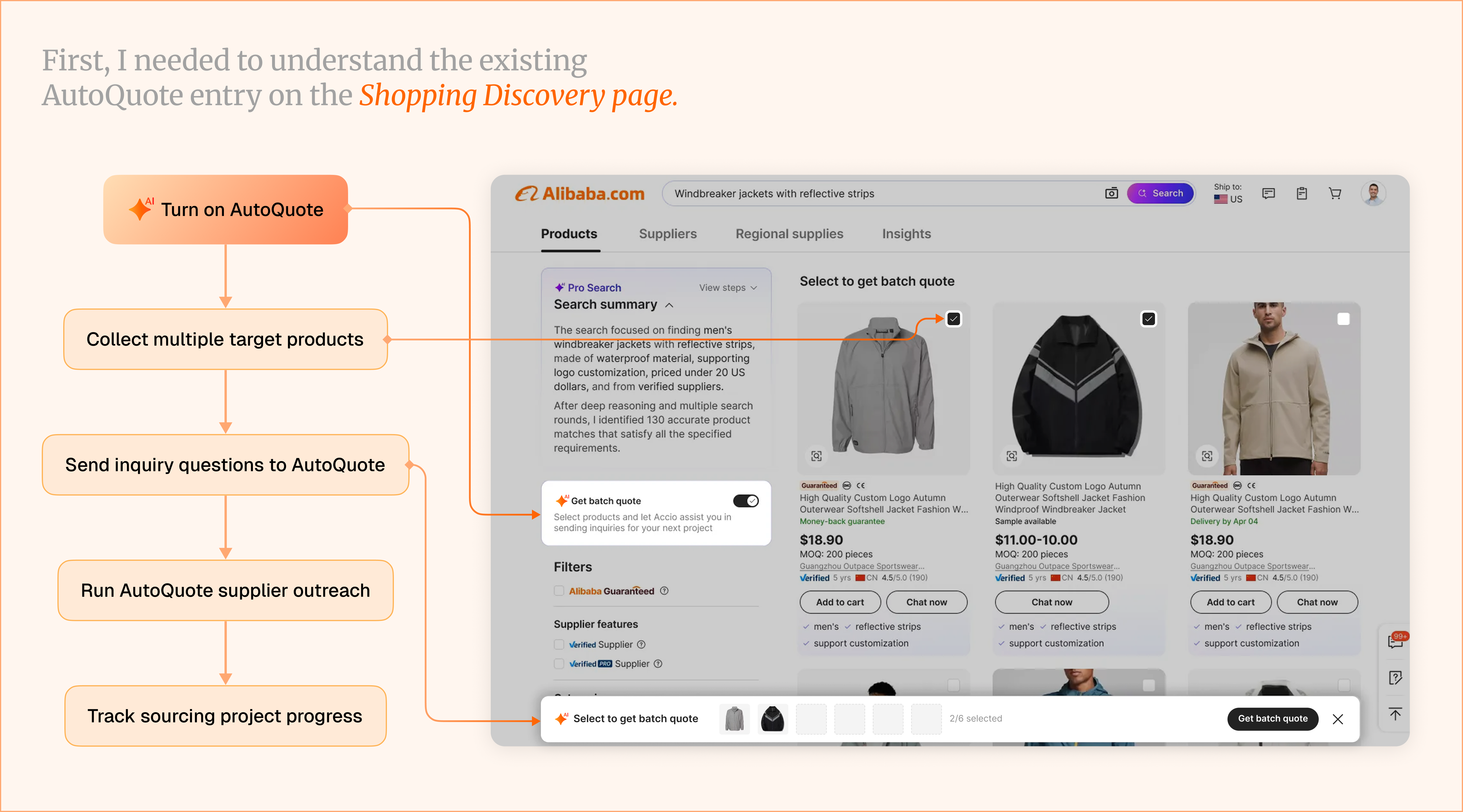
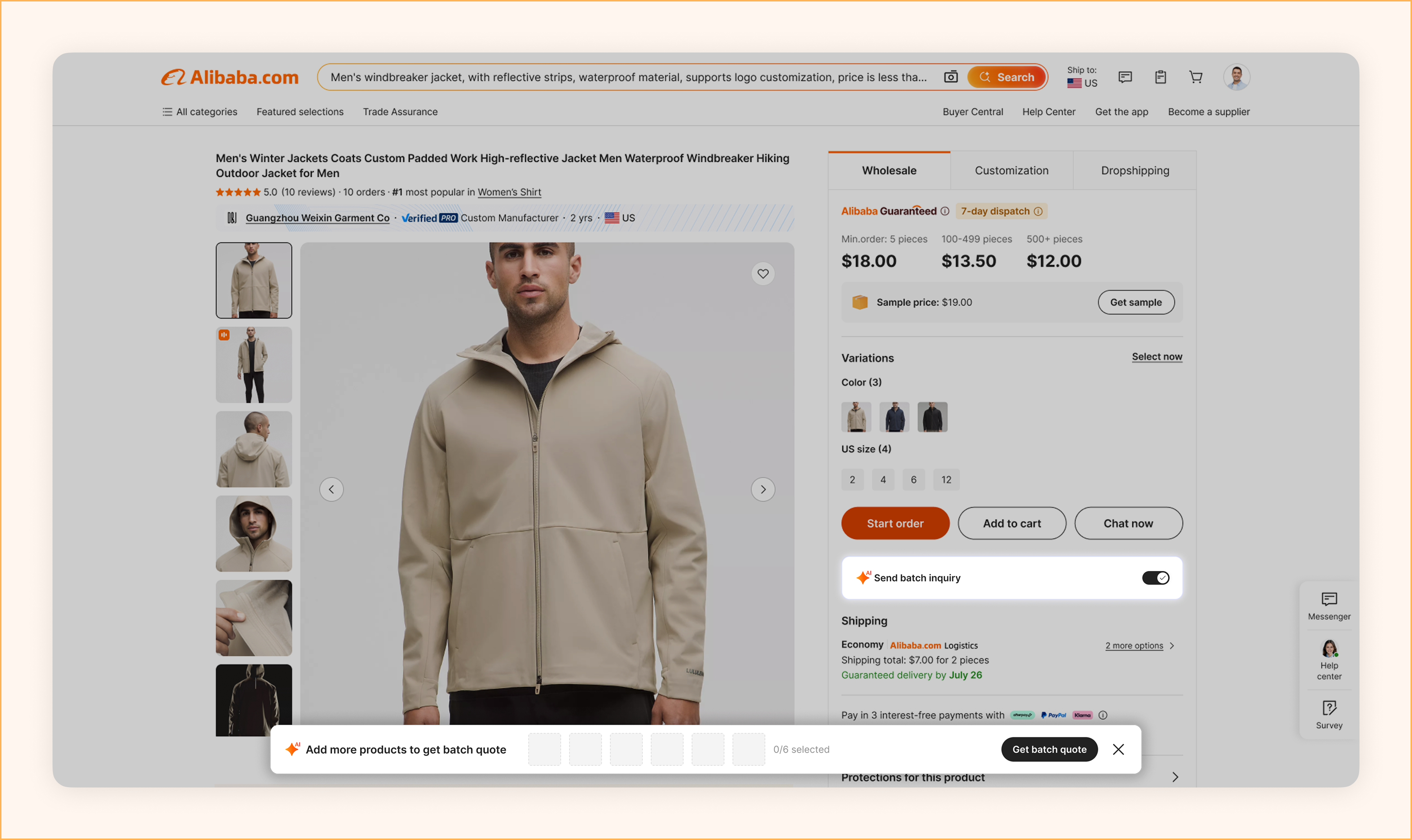
Reuse the existing switch and bottom selection tray, so the experience stays consistent from search results to product detail.
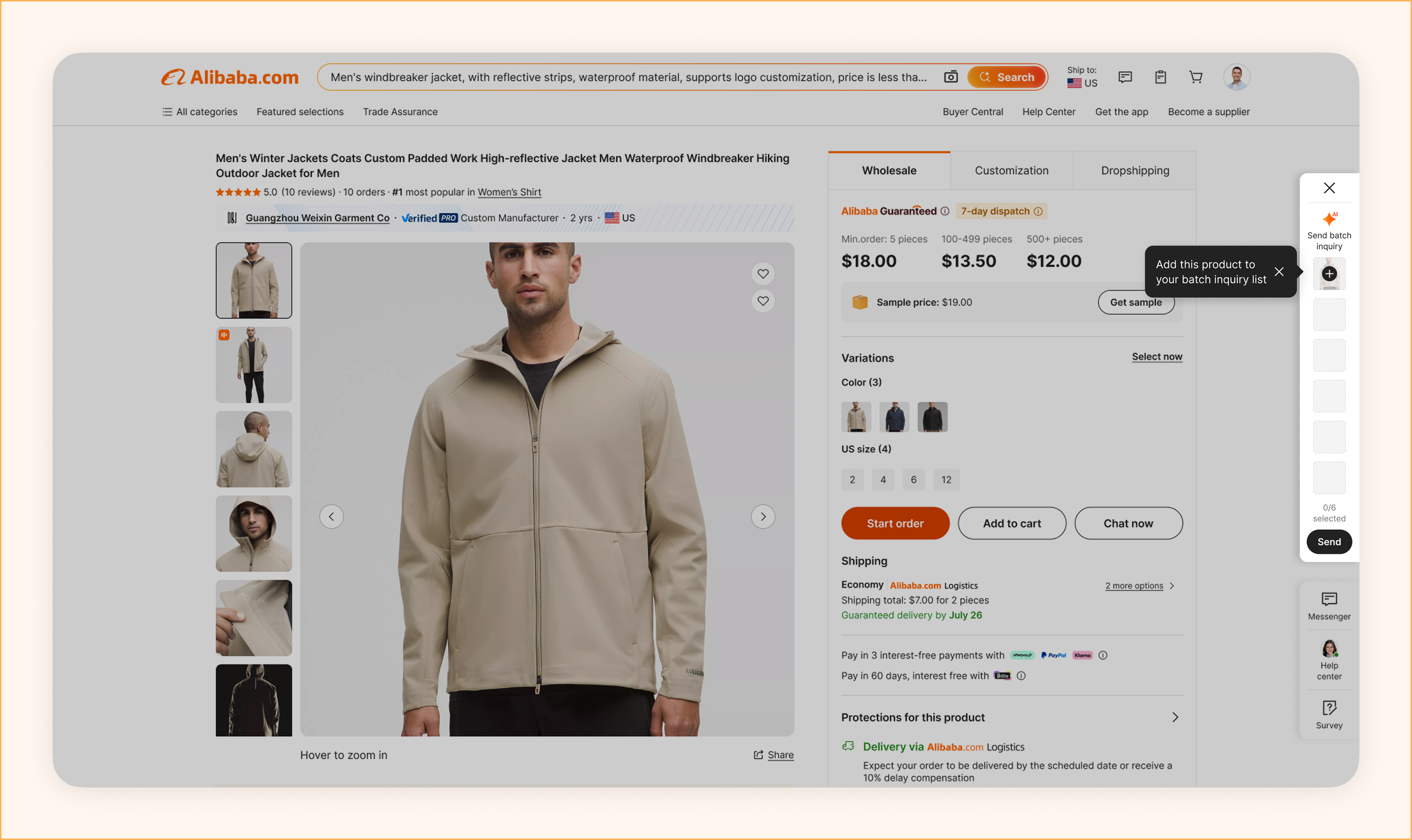
Because the AI toggle and horizontal tray obscure key product information, I explored a vertical tray that used available space along the side of the screen.
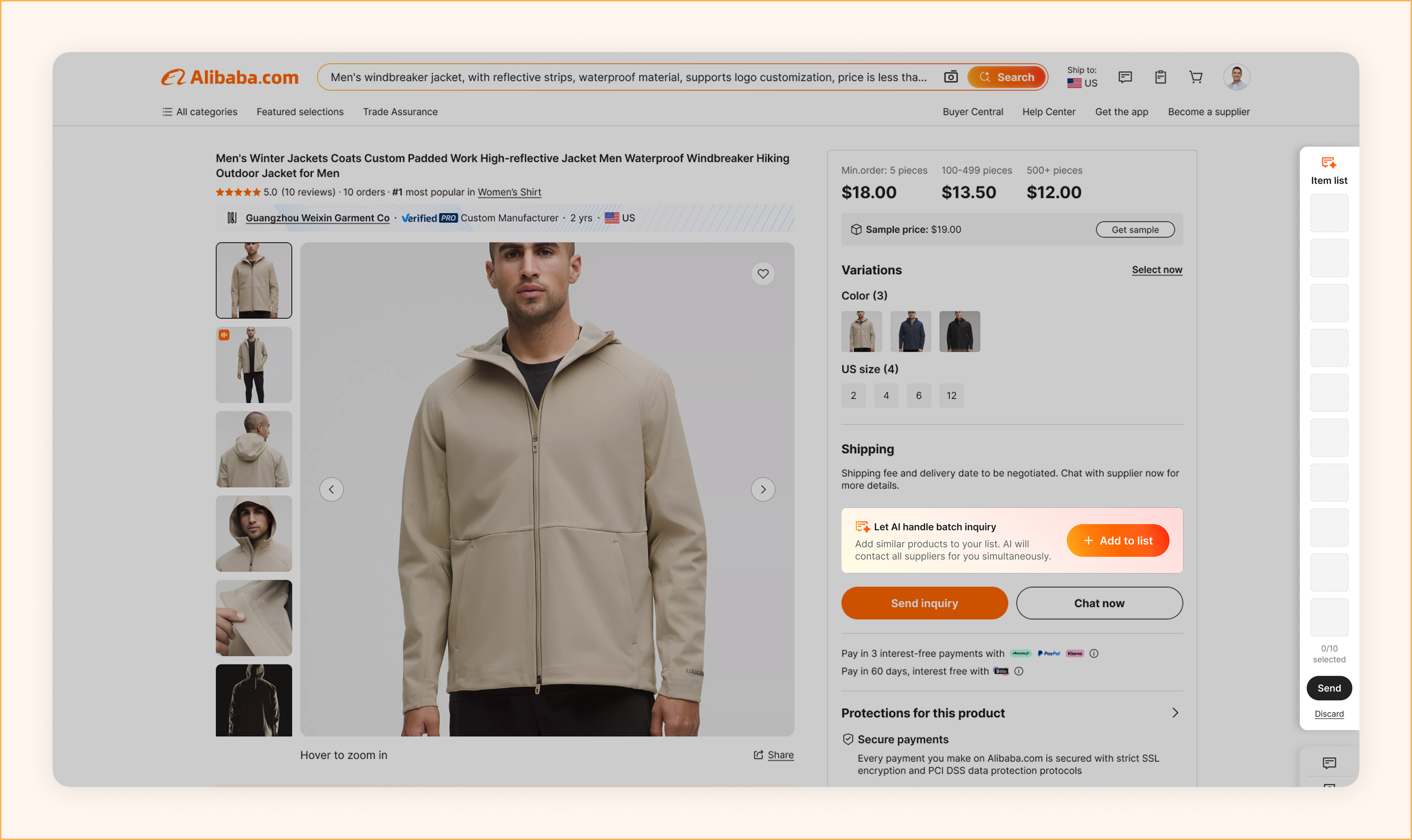
Place a more prominent AutoQuote prompt near the existing communication actions so buyers can notice and try the capability.
Questioning the flow
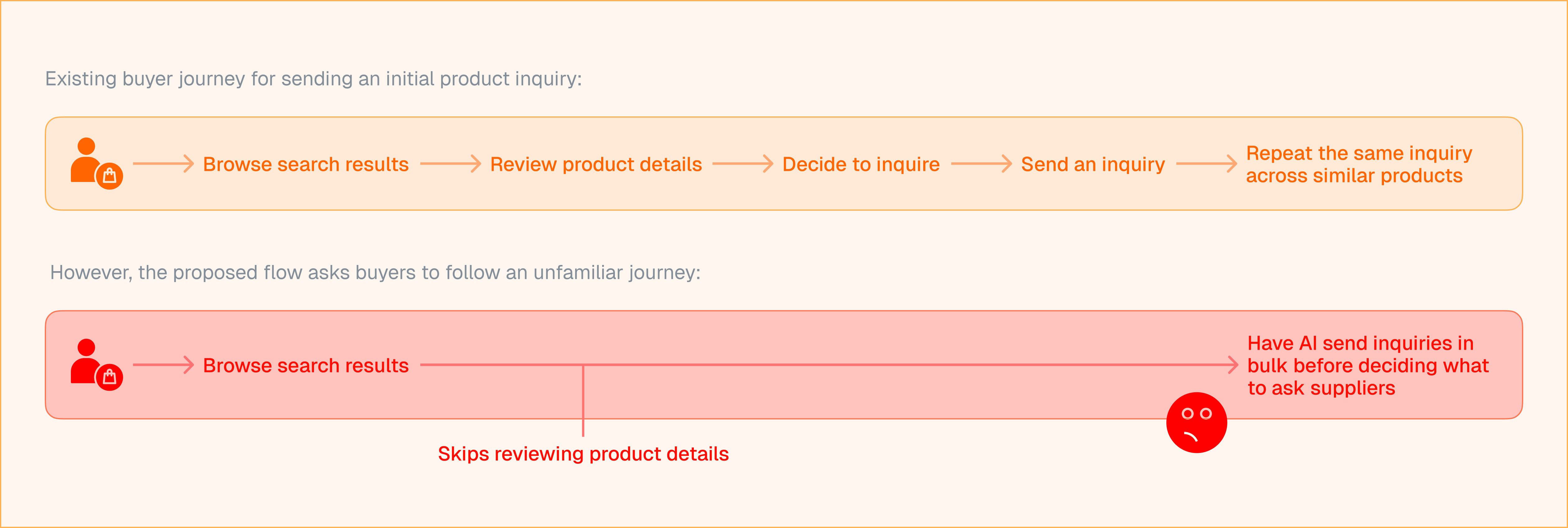
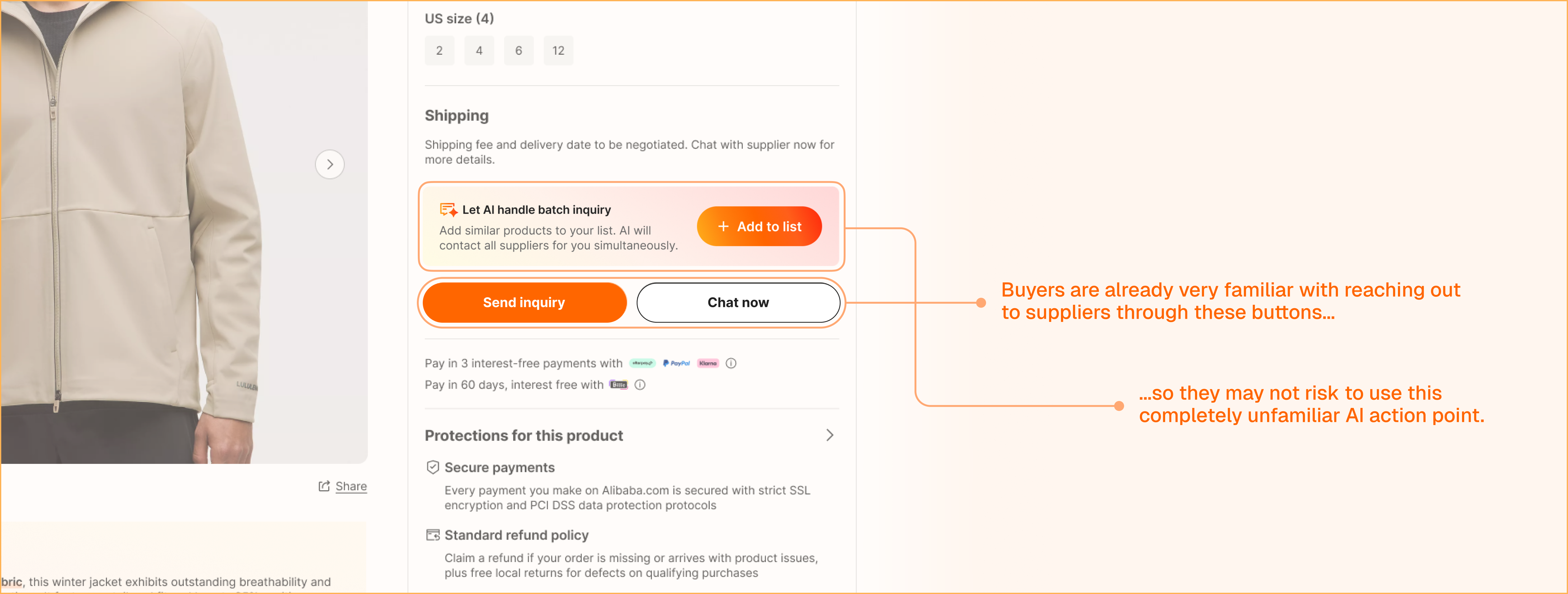
Project managers responded positively to the concepts. Yet as I worked through them, I became increasingly uncertain. Based on what I had learned about the product detail experience early in my internship, I identified issues with the proposed AI agent flow:
Exploring an alternative
Instead of introducing AI as a separate action and channel, I explored embedding it into the familiar inquiry flow. This could help buyers discover and try AI without disrupting their current behavior.
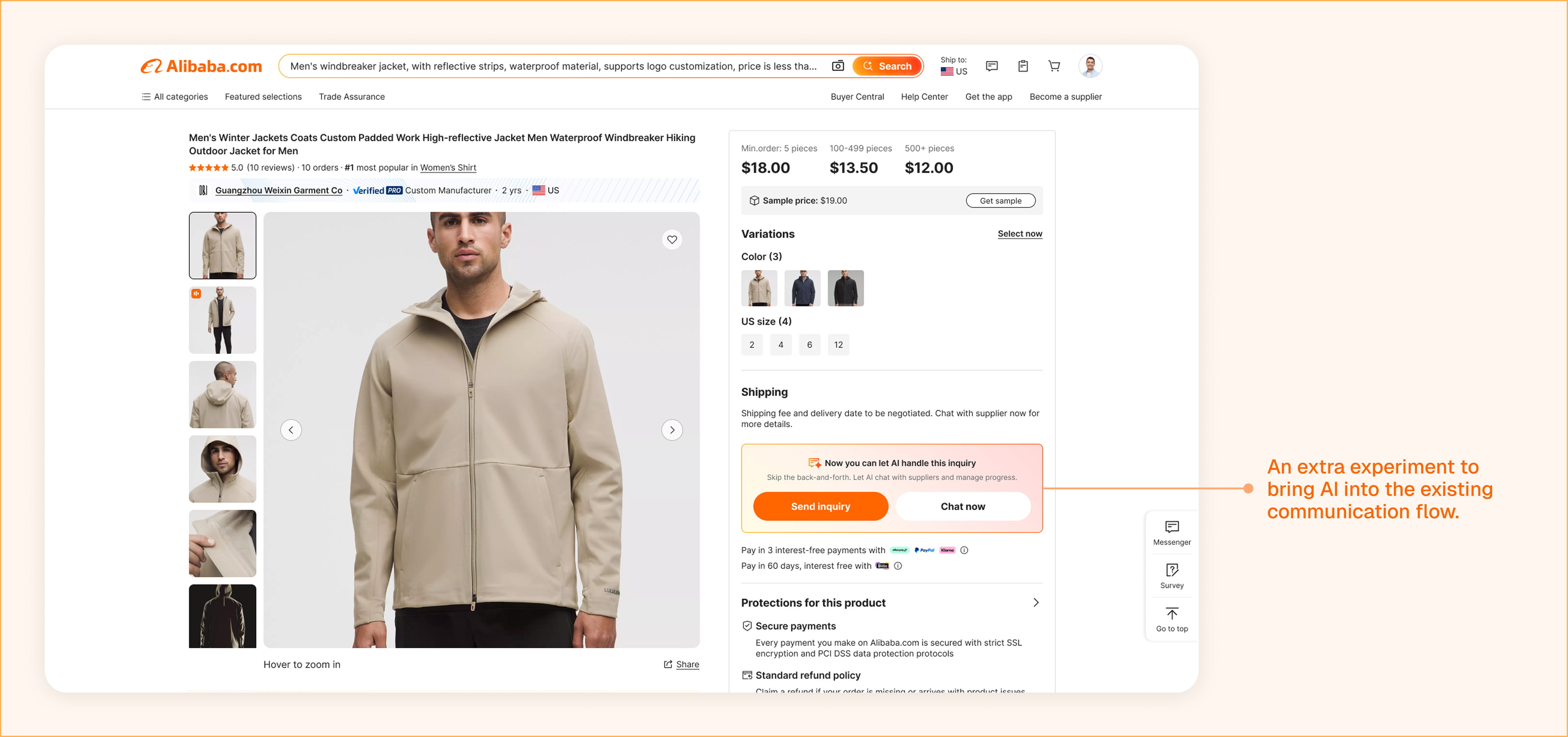
So I briefly shared it with the other designers and prepared the concept as a backup.
Turning point
The backup became valuable at a critical moment. During the executive review, the original direction was considered too complex, difficult for buyers to understand, and too disruptive to existing marketplace behavior.
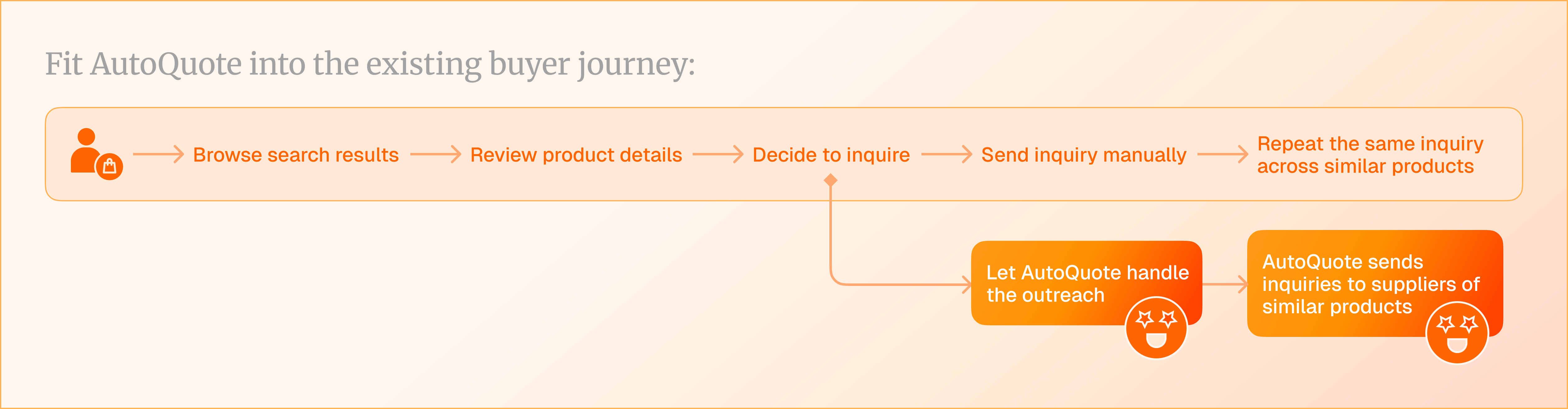
My concept that simplifies the journey and integrates AI more naturally into the user experience was brought into the discussion as a concrete alternative and received support from the group.
Design development
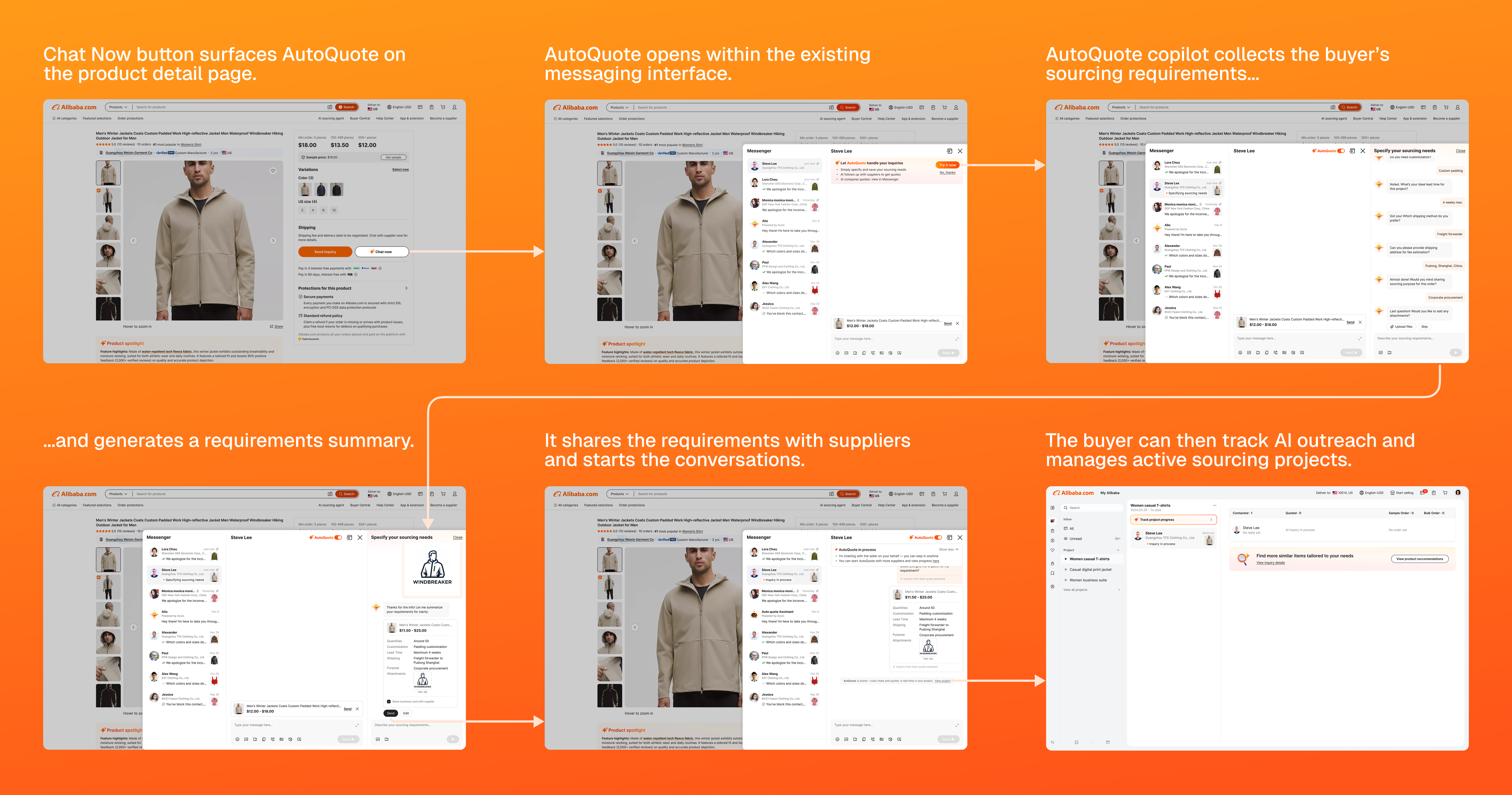
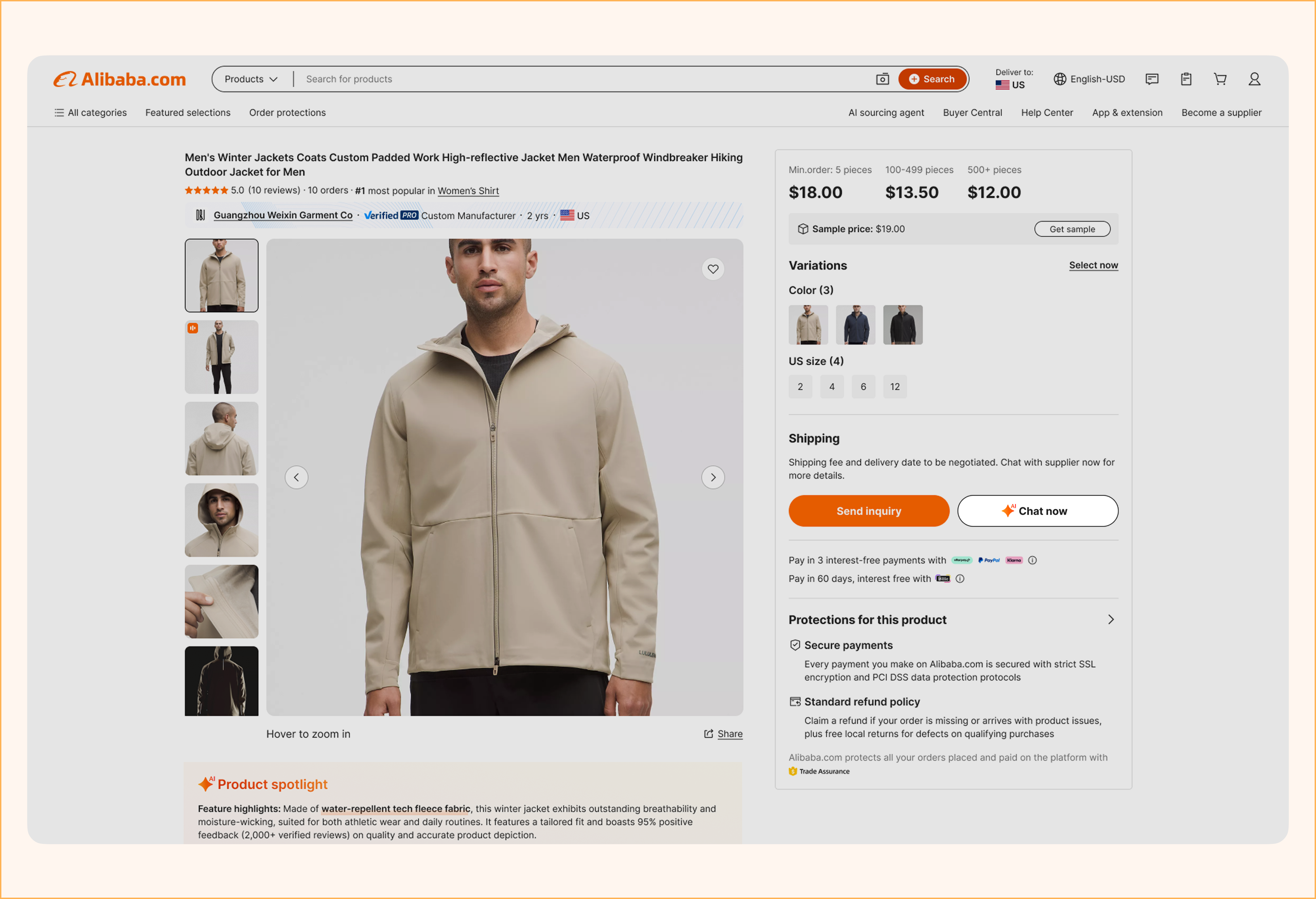
Preserve the existing layout while introducing AI ability through the familiar Chat Now button.
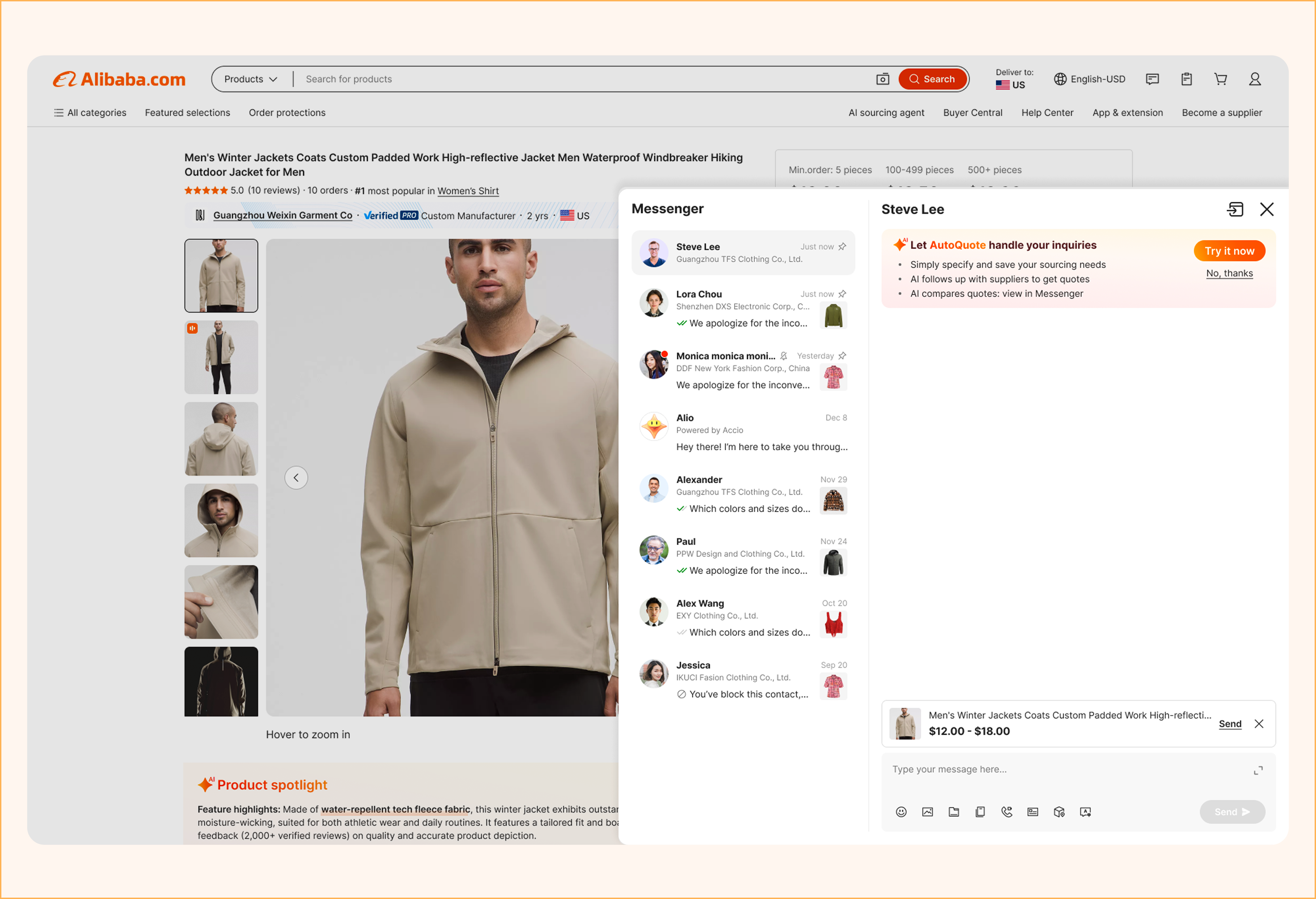
Given the tight timeline, I expanded my scope beyond the Product Detail Page and partnered with the Messenger product manager to design the copilot experience.
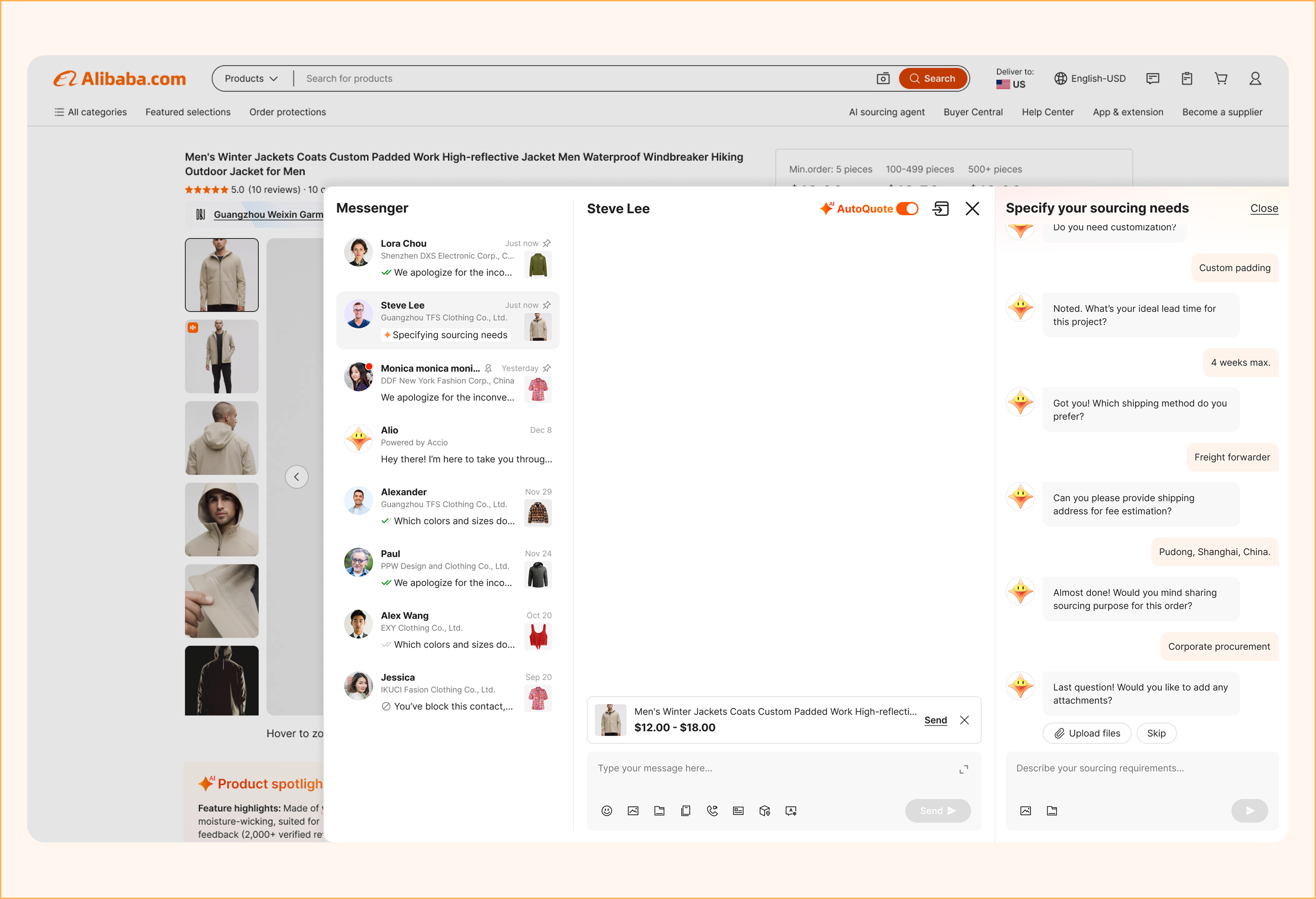
Separating AI chat box from the supplier conversation keeps the path clear and allows normal supplier communication to continue.
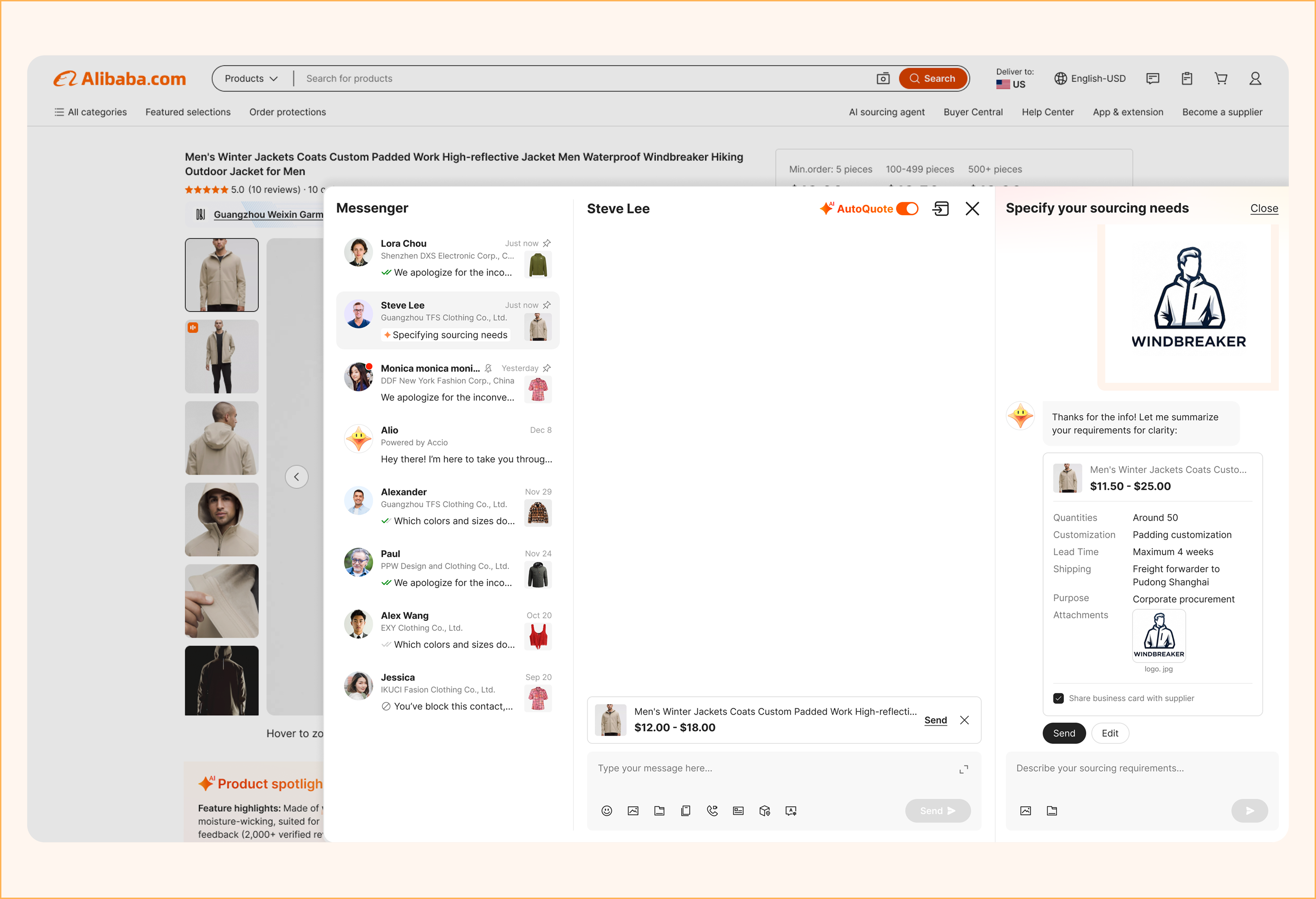
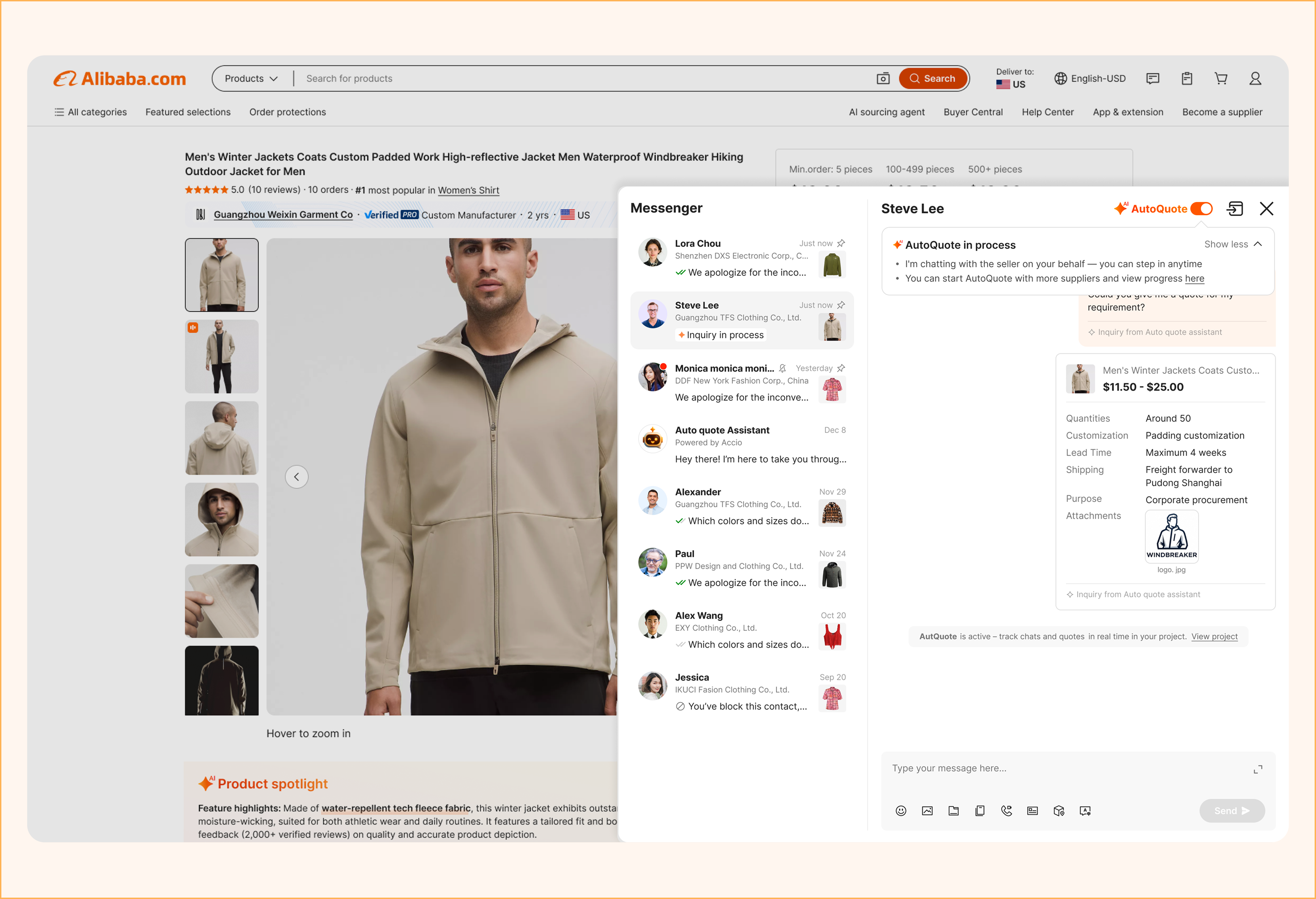
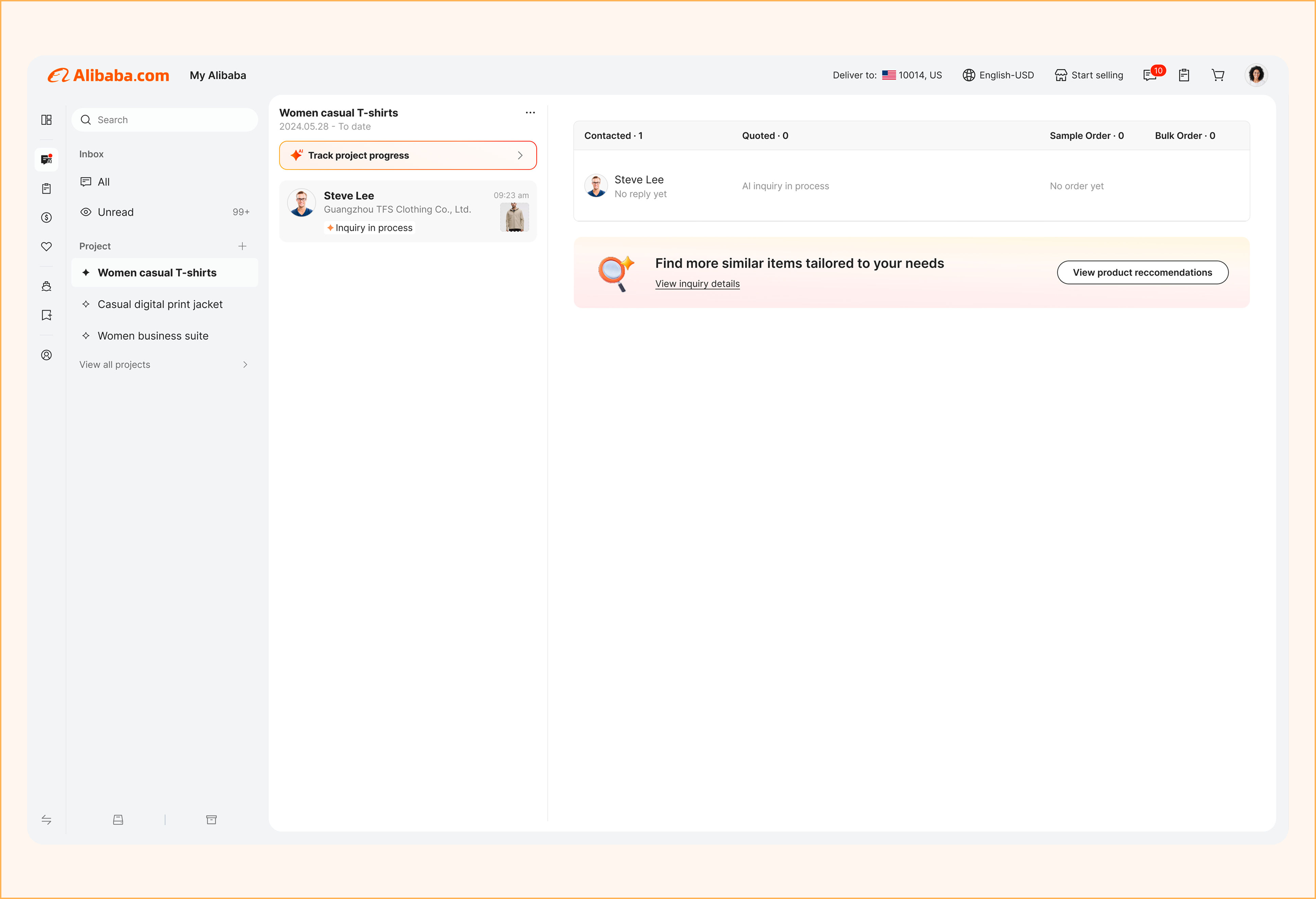
*This function was designed by the partner designer on the Buyer and Supplier Messaging team.
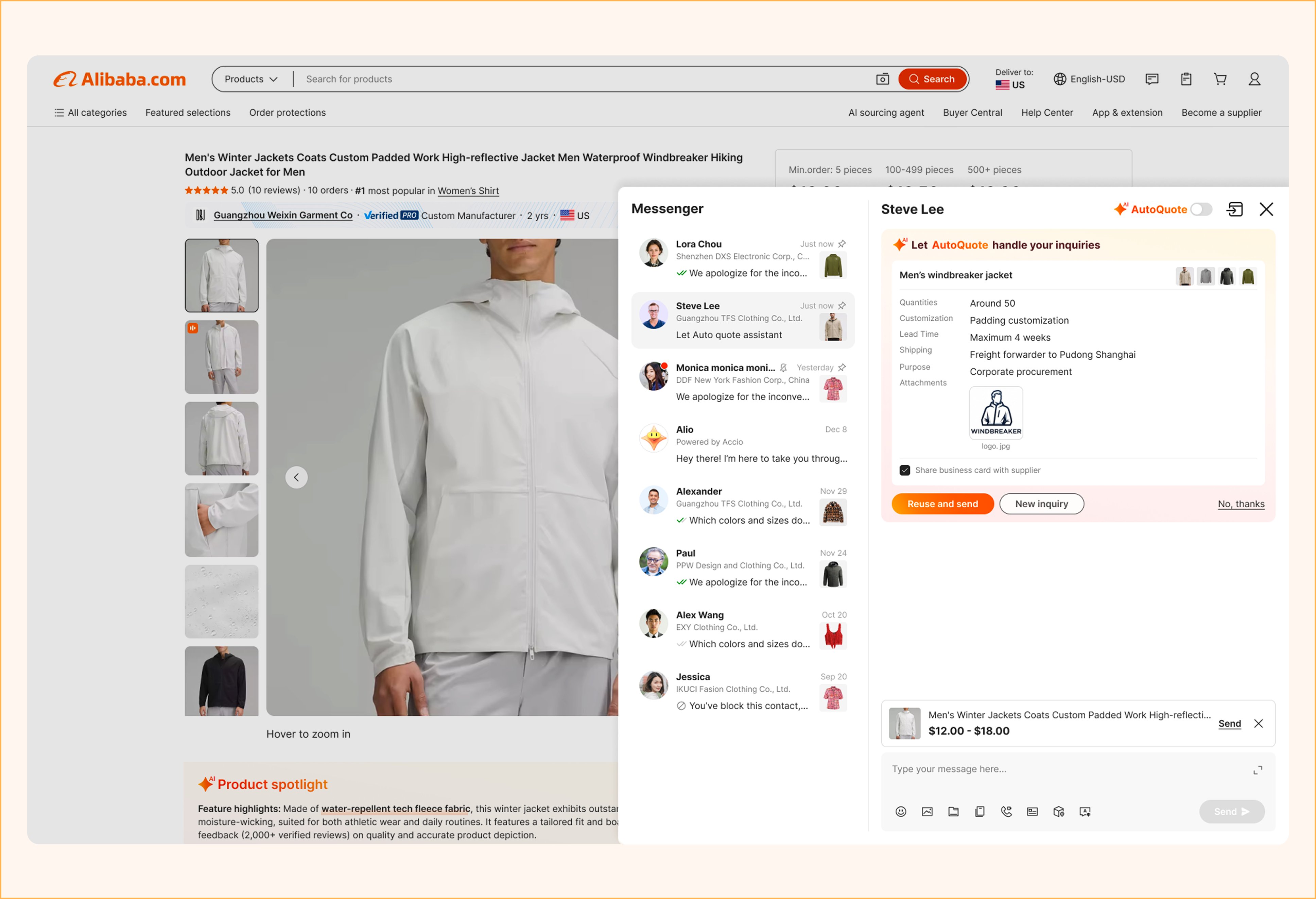
AutoQuote recommends previous inquiry form when buyers start another supplier conversation, so that they can review and reuse it again to reduce repeated work.
Outcome
*Exact figures are confidential.
Reflections
