Overview
Fuel expenses are the single largest and most volatile operating cost for airlines. Tight turnaround aircraft keeps the auxiliary power unite (APU) running, so that every additional minute burns fuel and generates carbon emission.
However, inefficient cabin cleaning dispatch can extend turnaround time, delay departures, increase APU costs and carbon emissions, and decrease passenger satisfaction.
Solution
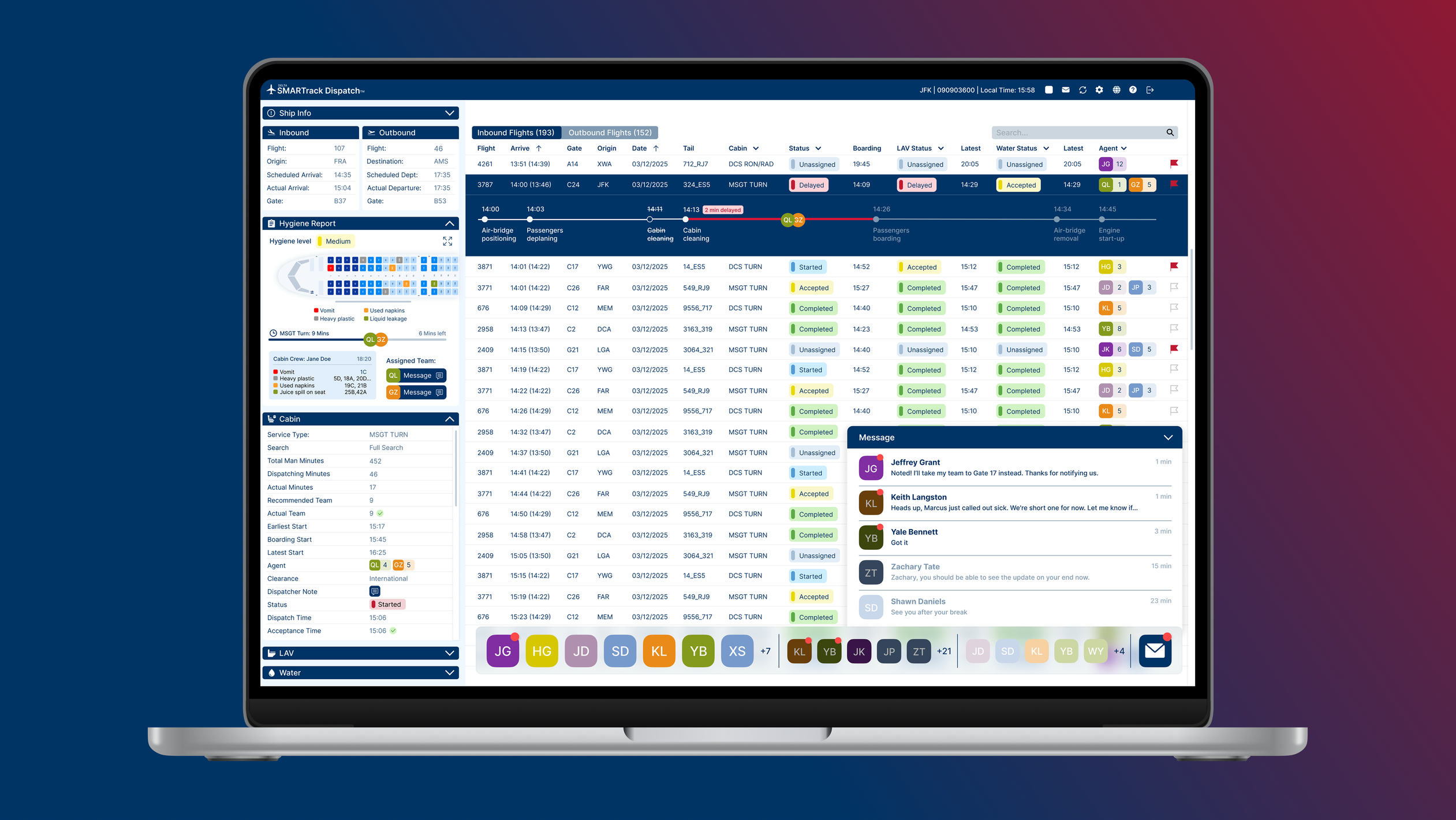
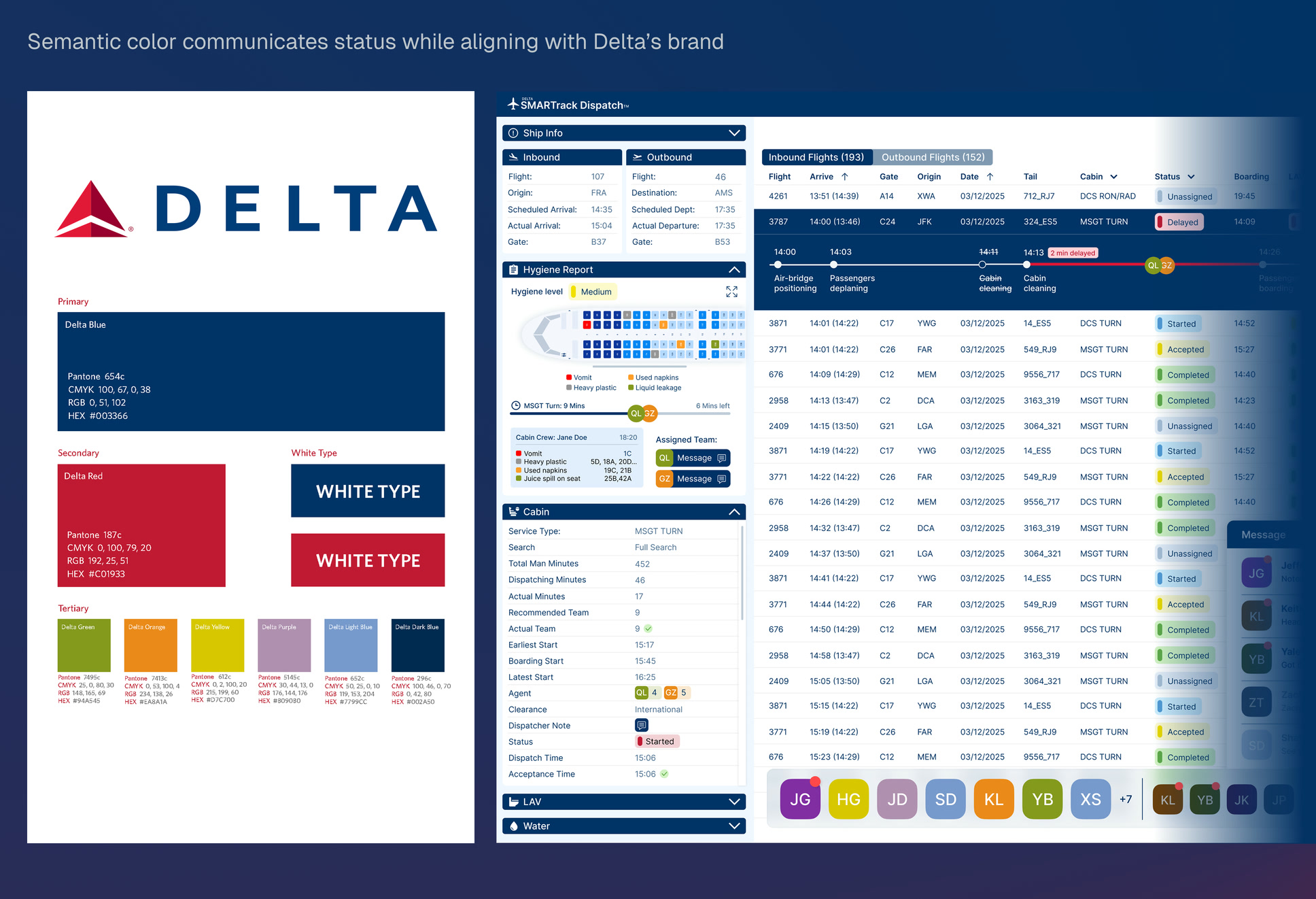
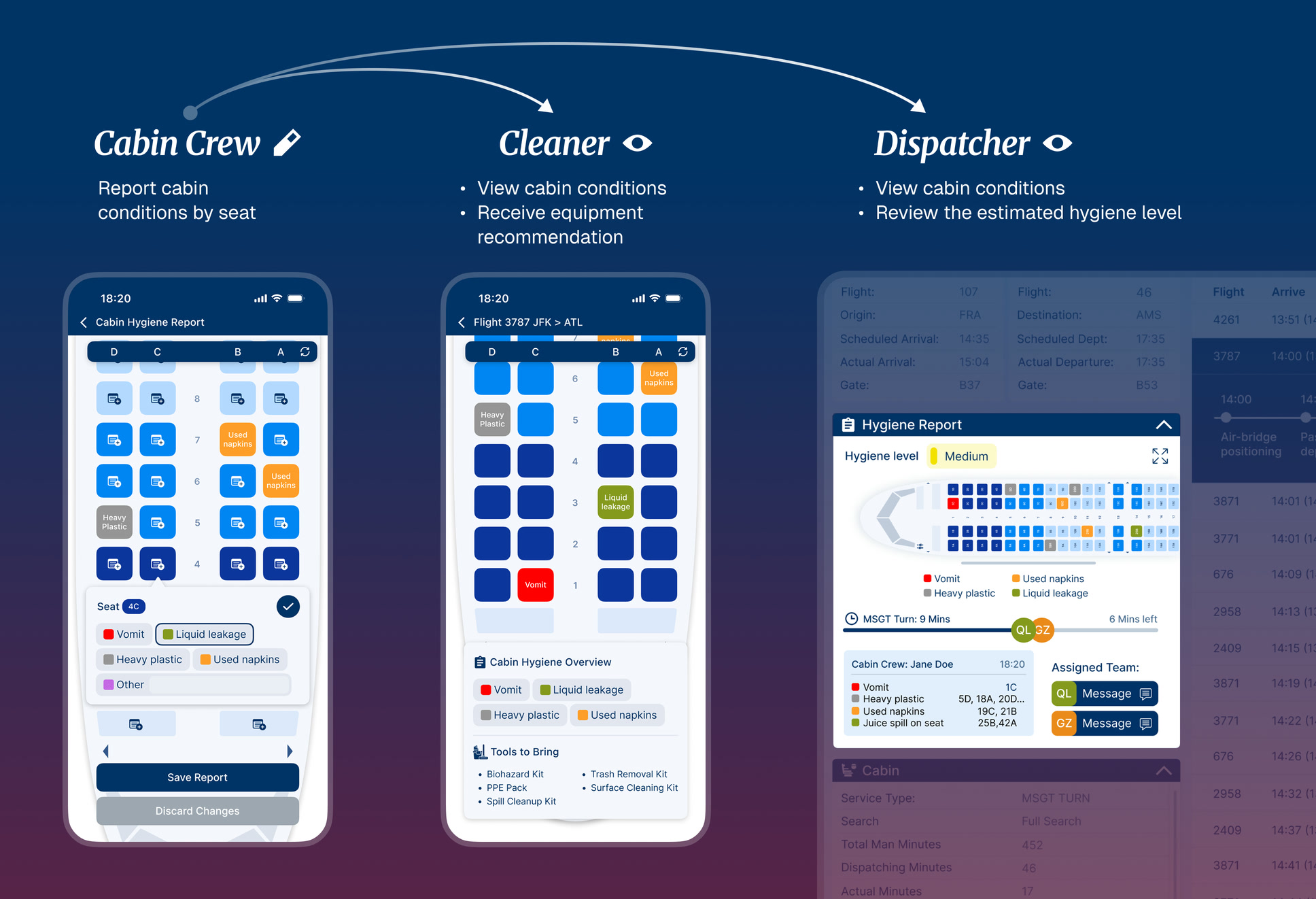
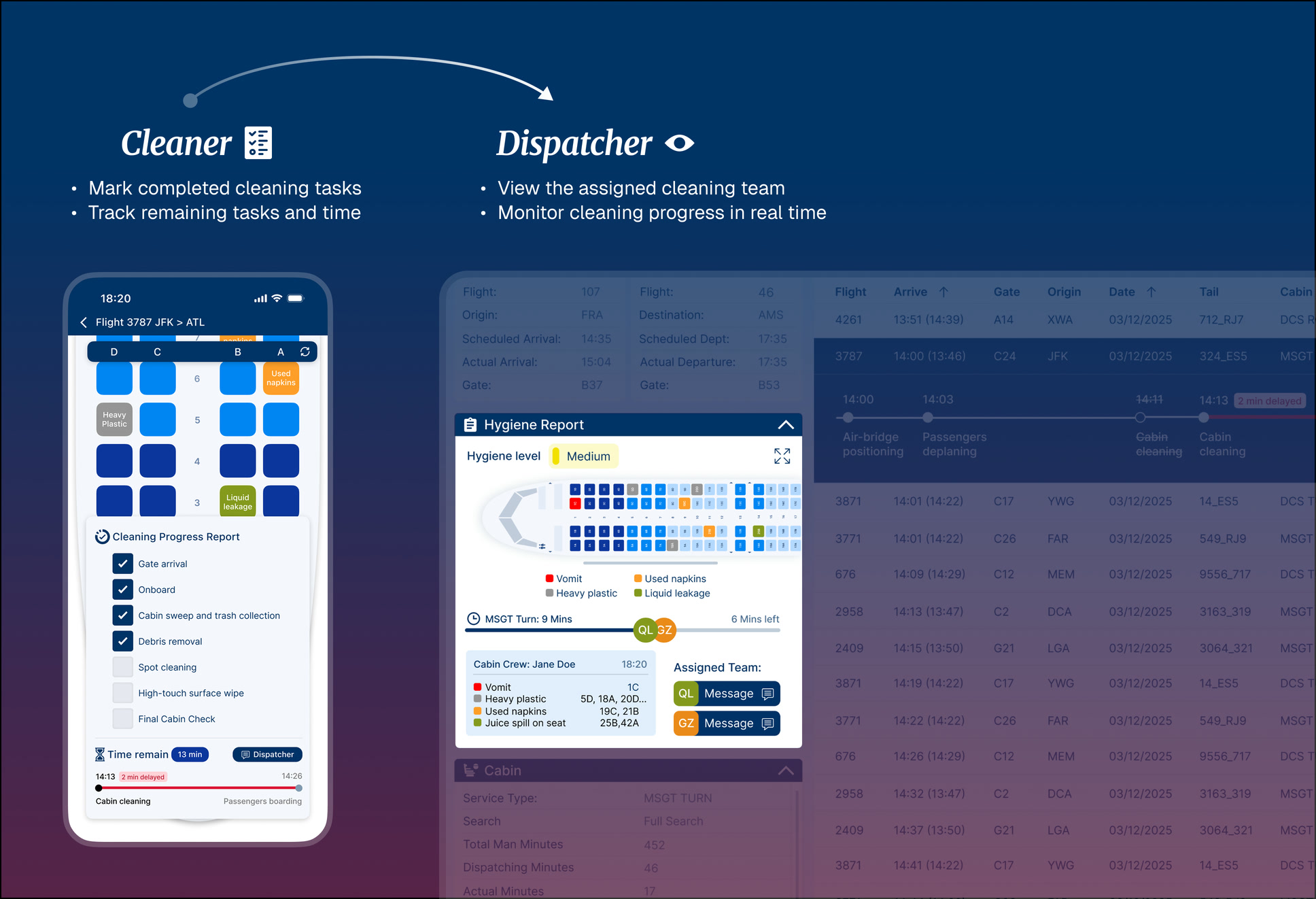
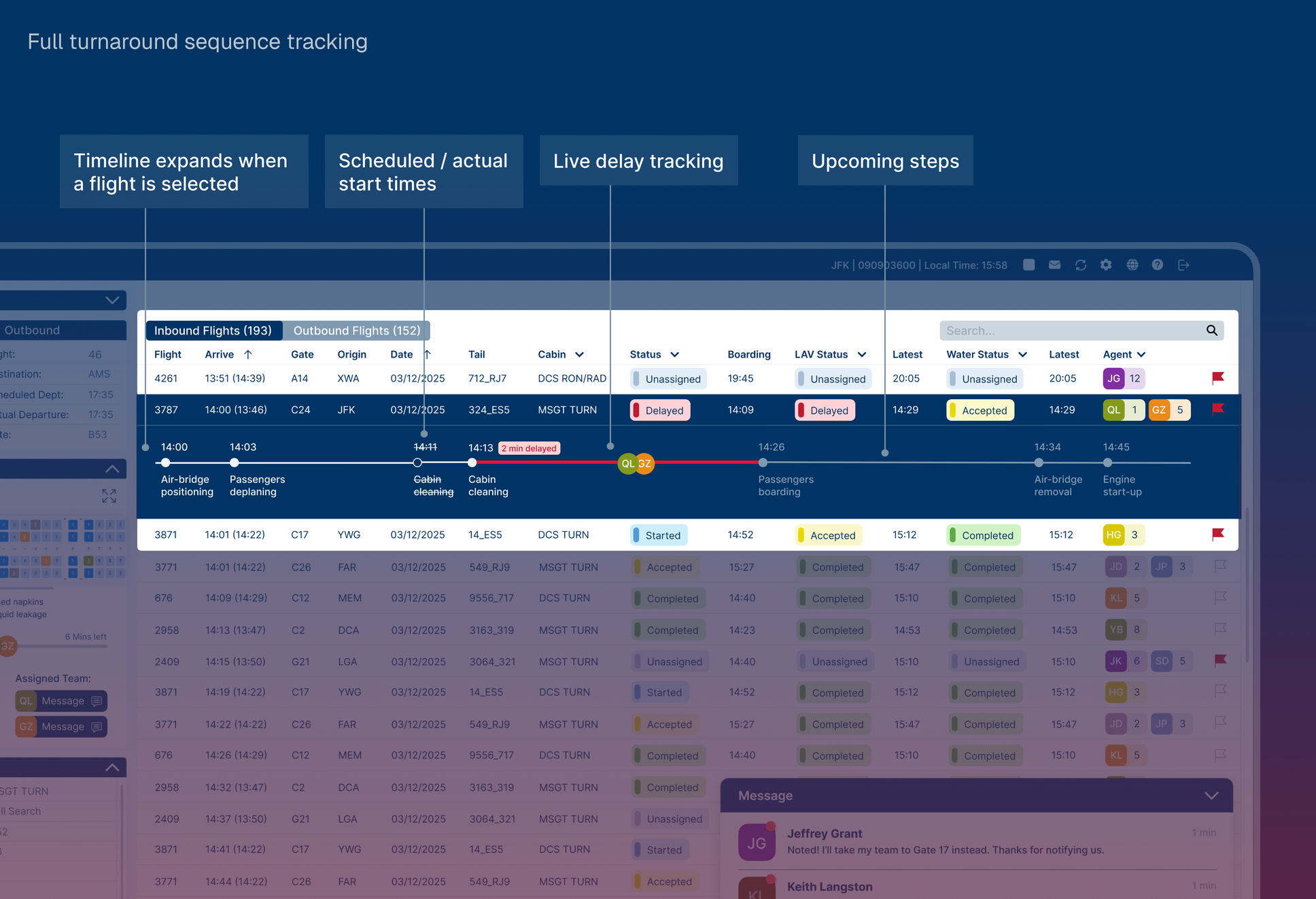
We redesigned Delta’s SMARTrack Dispatch platform to share cabin conditions reported by cabin crew directly with dispatchers and cleaning teams before cleaners reach the gate. The system also predicts cleaning demand, recommends staffing and equipment, and tracks progress in real time, helping cleaning teams arrive prepared while reducing the risk of turnaround delays.
Our solution was projected to save one to two minutes of turnaround time per flight, support higher aircraft utilization, and can avoid up to 344 million kilograms of CO₂ annually at industry scale. It was well received by our Delta sponsors, who recognized its operational value.
Context
Reduce flight turnaround time = reduce fuel burn.
Delta’s Sustainable Skies Lab challenged our team to explore how design could support Delta’s broader path toward net-zero emissions by 2050.
In our early conversations with Delta, we captured a key information that reducing avoidable ground time could limit unnecessary APU fuel burn and improve aircraft utilization, which could reduce carbon emission and improve company revenue.
During our research, we learned that cabin cleaning, as a tightly coordinated turnaround activity, could be improved to reduce aircraft ground time.
Literature review
How does cabin cleaning impact turnaround time?
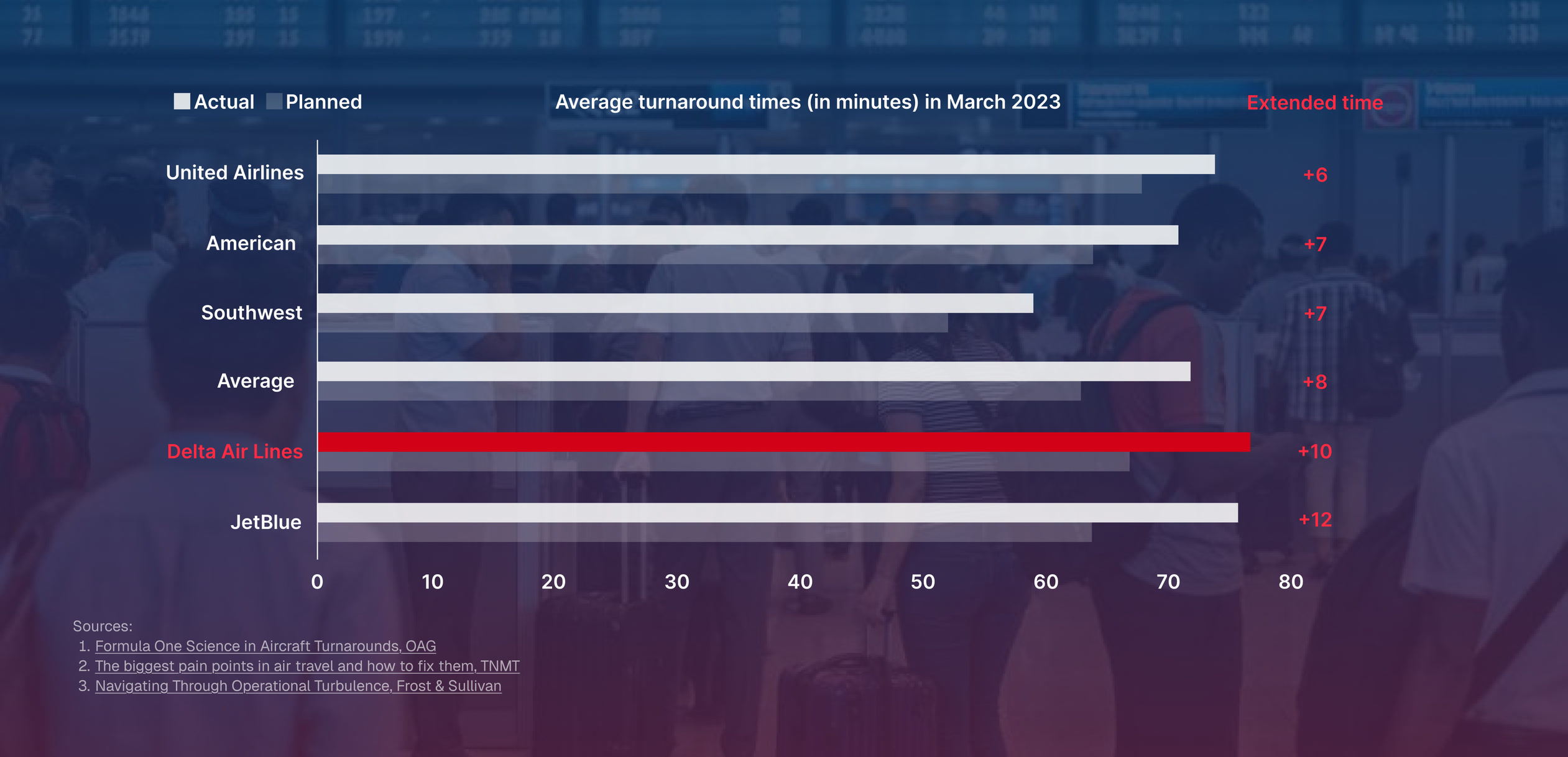
Finding 01. Turnaround times take longer than expected
The average turnaround times commonly exceed the planned time, with Delta Air Lines extending 10min than planned in average.
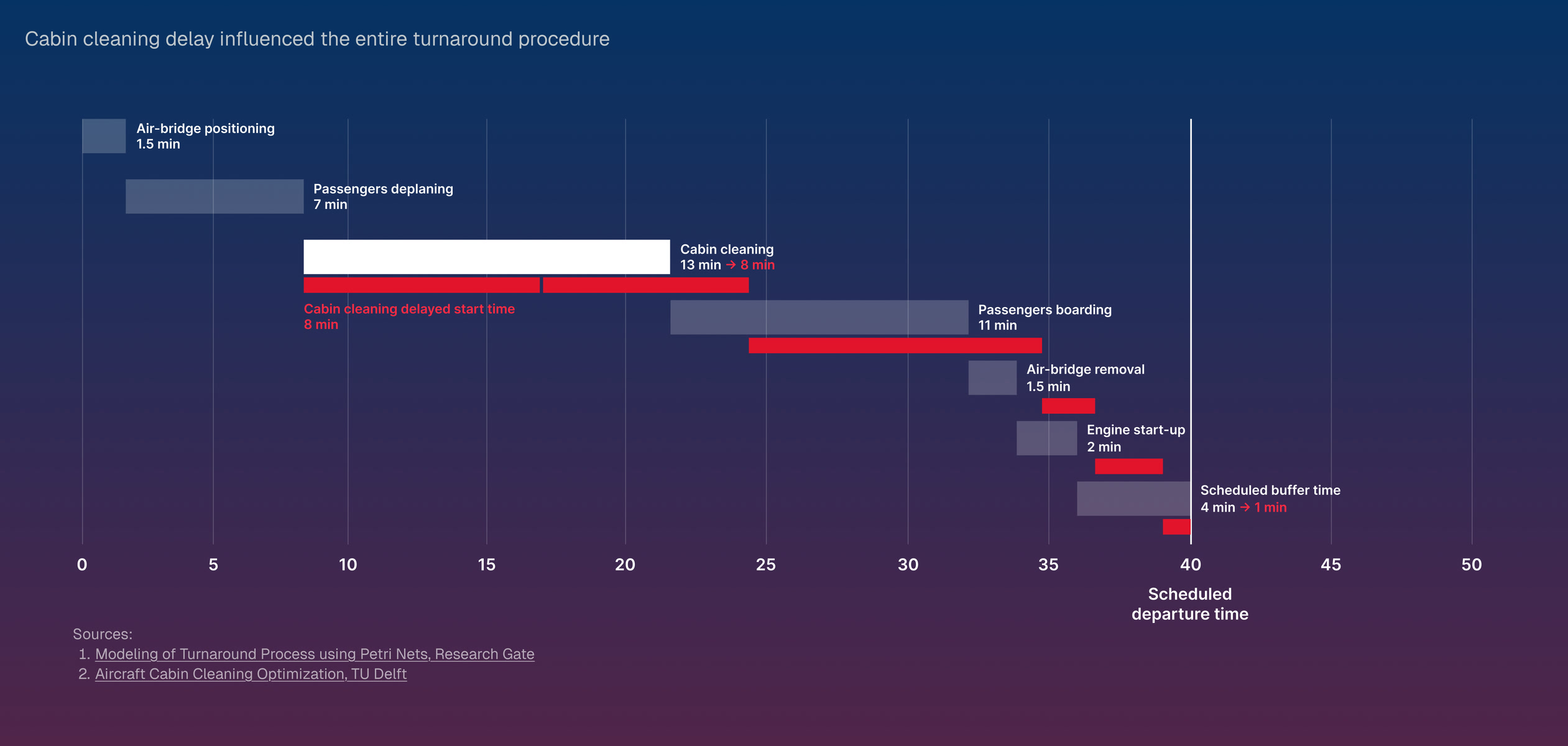
Finding 02. Delay of cabin cleaning directly affects turnaround process.
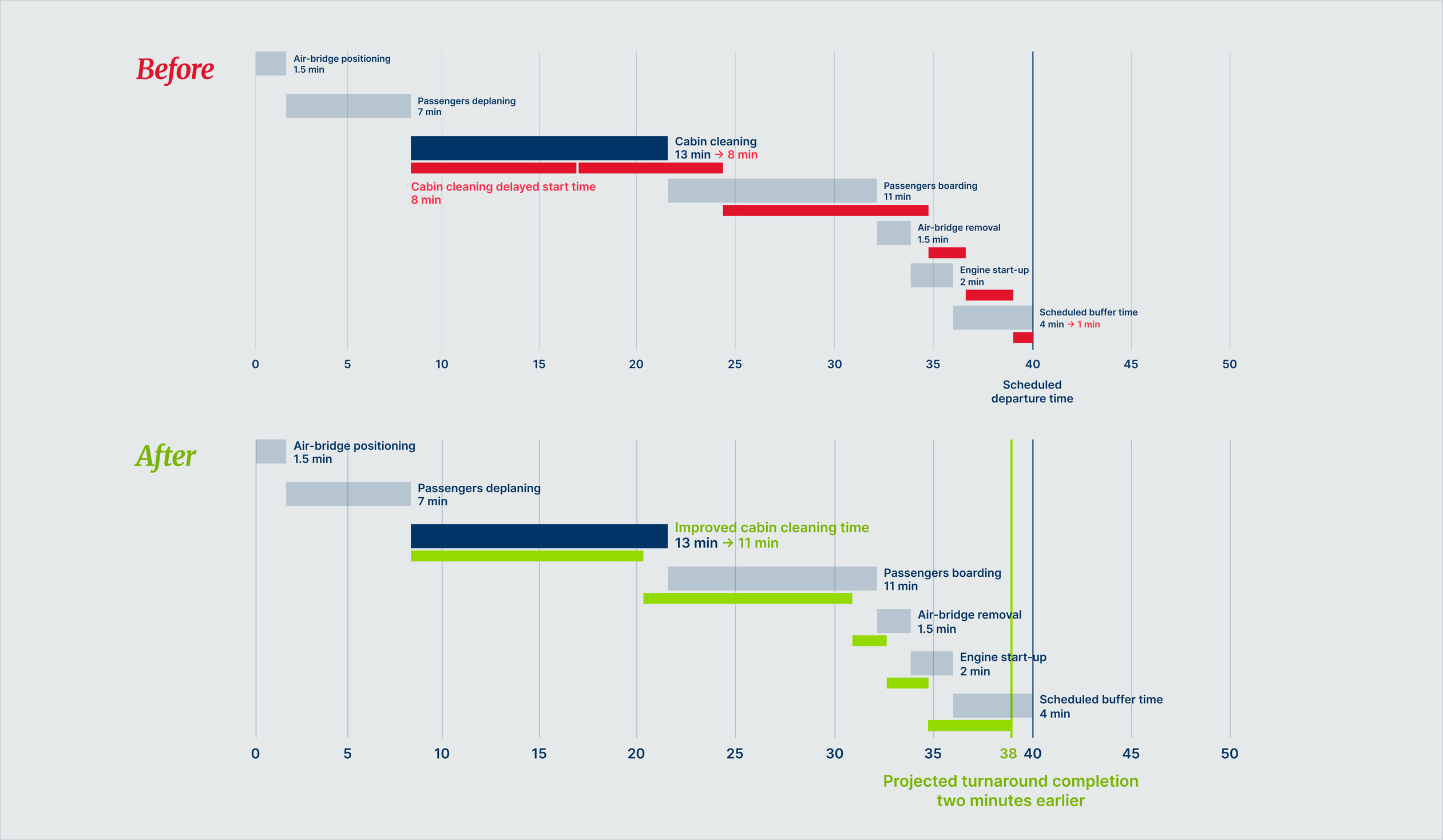
In the industry research below, the cabin cleaning started off with an 8min delay, not only caused a compression of cleaning time and discounted cleaning effect, but also pushed the entire turnaround procedures and cutting it very close to flight delay.
Finding 03. Every turnaround minute generates 172M kg CO₂ annually, the concerns are indeed.
Since the engine keeps running non-stop during short-turnaround, every single minute burns fuel, generates carbon emissions, and reduces revenue. By saving 1 min of turnaround time per flight, we could in total reduce 172 million kg carbon emissions per year.
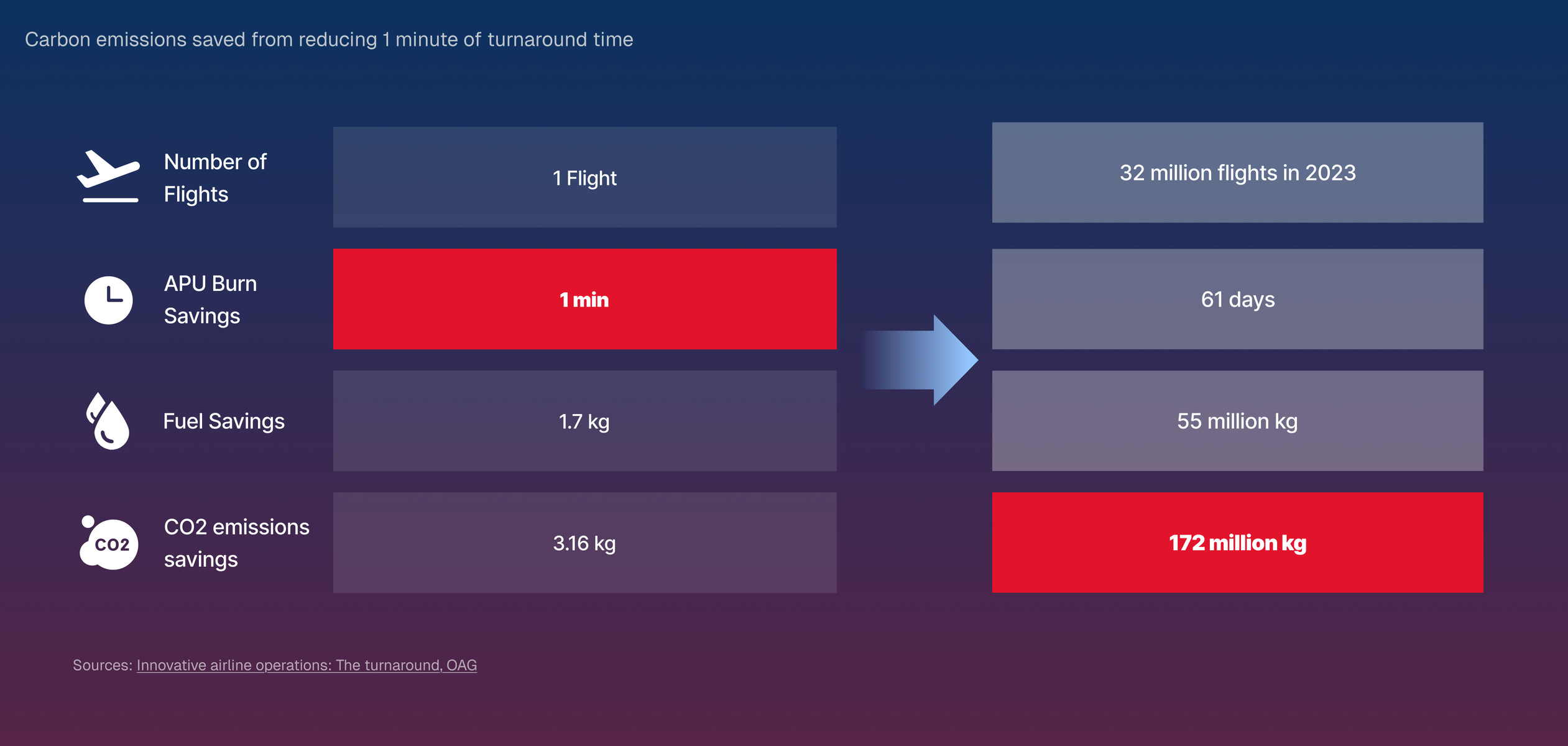
The discovery revealed the value and opportunity of reducing cabin cleaning delay, and potentially further reducing cabin cleaning time, to reduce flight turnaround time.
Next, our challenge was to figure out what causes cabin cleaning delay.
Stakeholder interview
The delay was never about cleaning speed, but coordination
We interviewed the Manager of Technology and Dispatch at Delta to map how cabin cleaning actually gets coordinated, with the expectation to find friction in the cleaning work itself. Instead, both problems we found sat upstream, in how decisions get made and how information moves.
Finding 01. Turnaround decisions rest on individual judgment
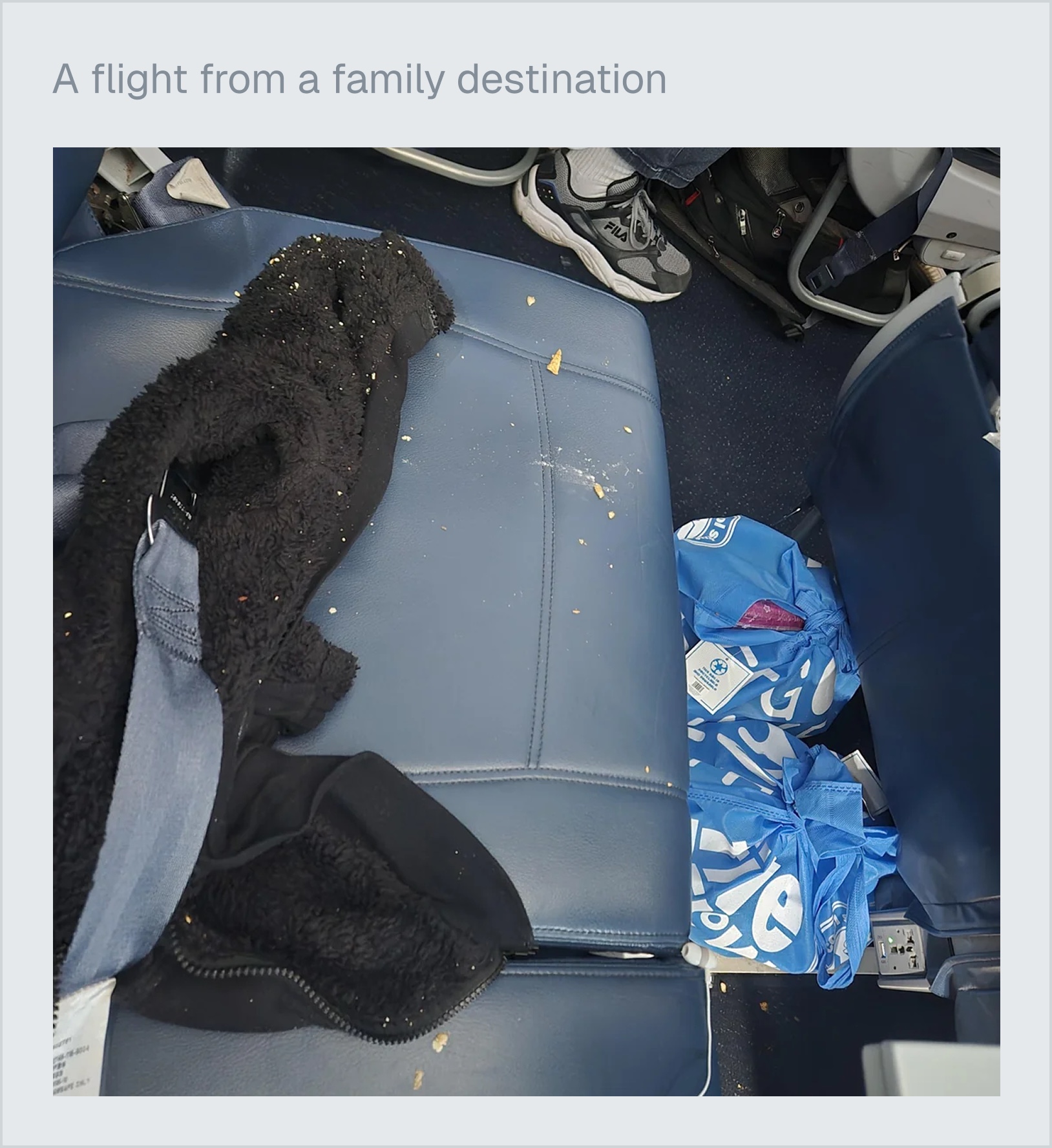
Cleaning demand is estimated by dispatchers
Cabin soil levels vary widely by route, but dispatchers have no data but to estimate required cleaning effort from personal experience. Under dispatch cleaners can cause extended cleaning time and flight delay.
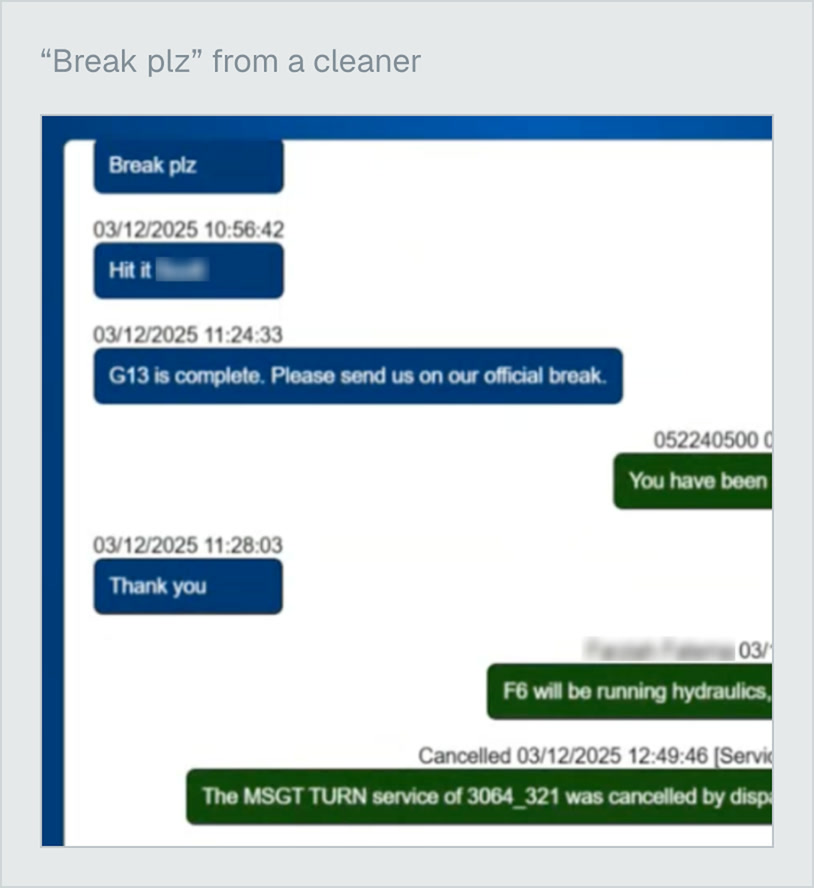
Workload is distributed by hand
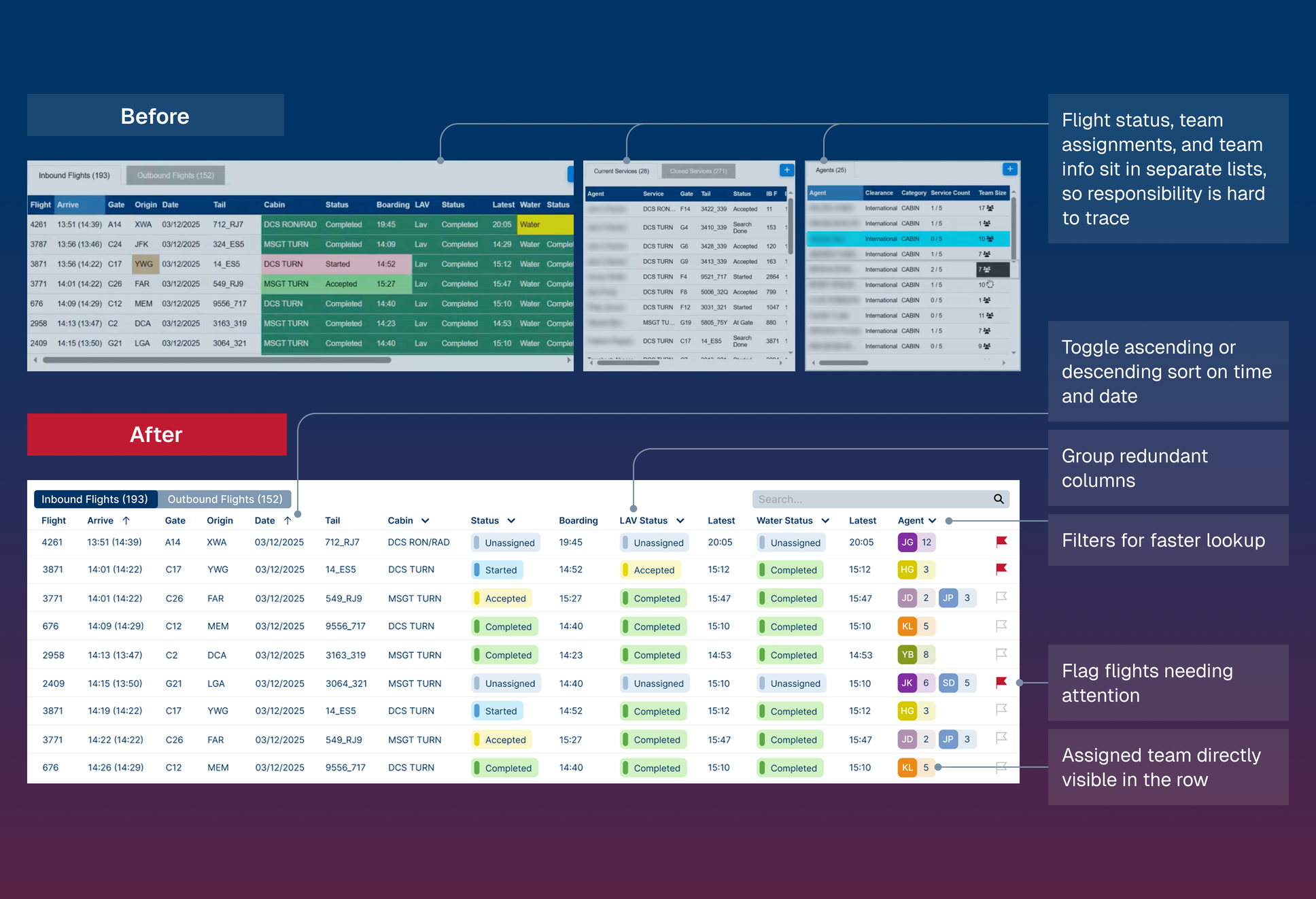
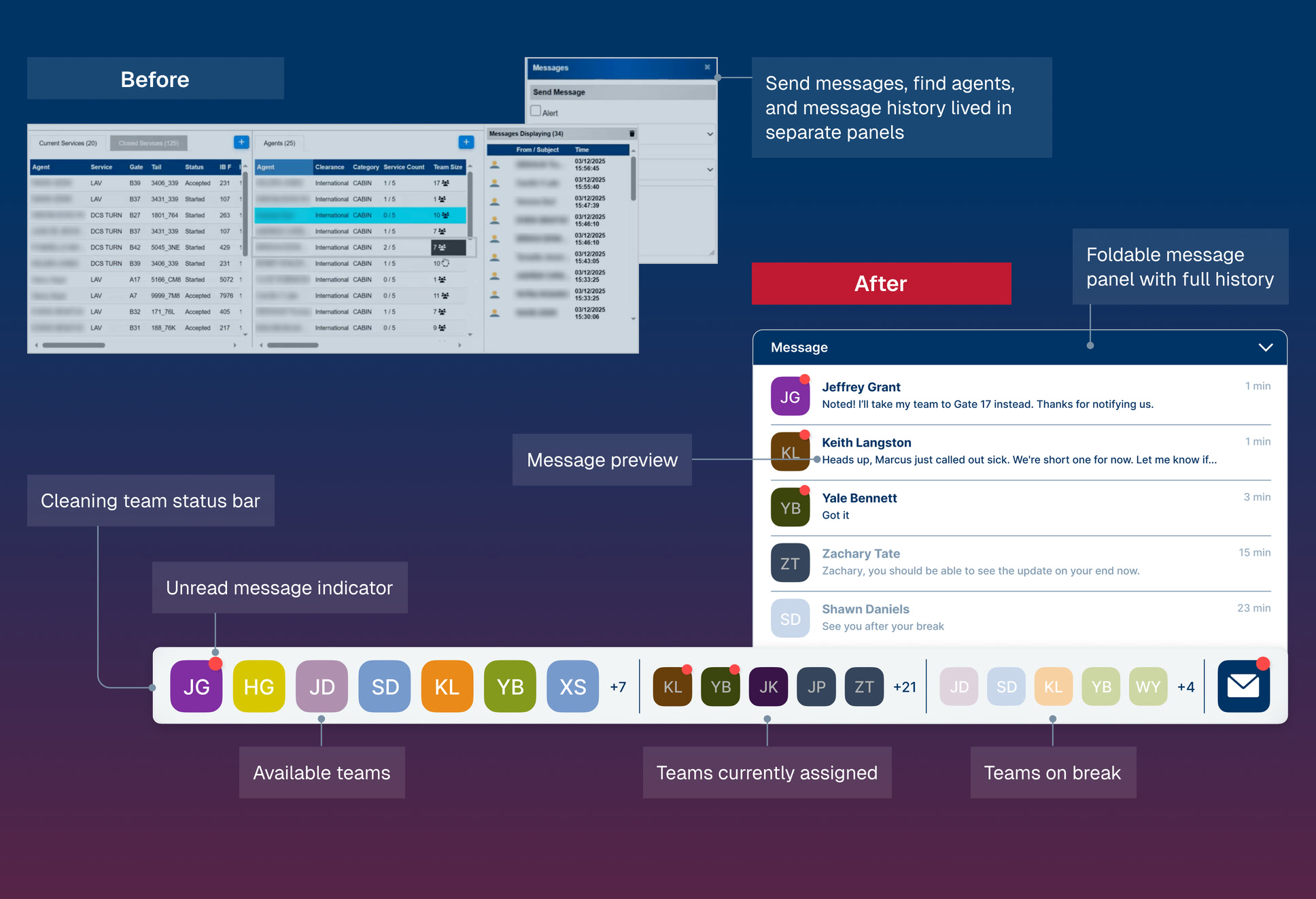
Dispatchers assign each cleaning team manually across a full board of inbound flights. Without visibility into current team status, some crews absorb back to back turns while others sit idle, which creates fatigue.
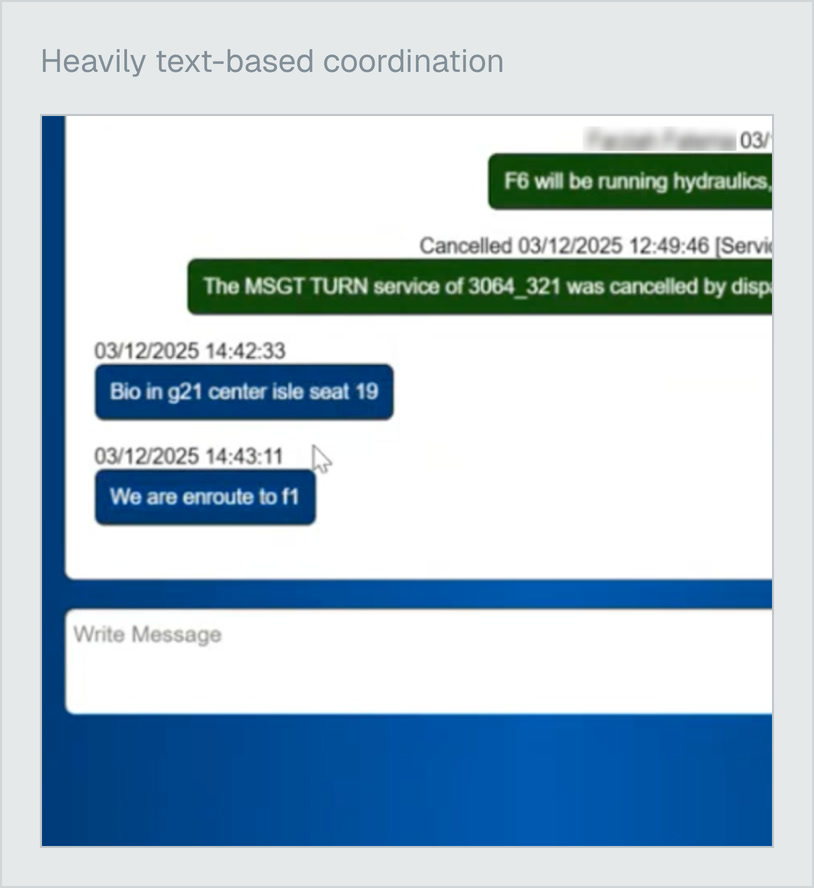
Coordination runs on free text
Dispatchers and cleaners communicate by messages containing gate numbers, tail numbers, and service codes. Under time pressure, a single mistyped gate sends a crew to the wrong aircraft.
Finding 02. Information moves in a line, and degrades along it
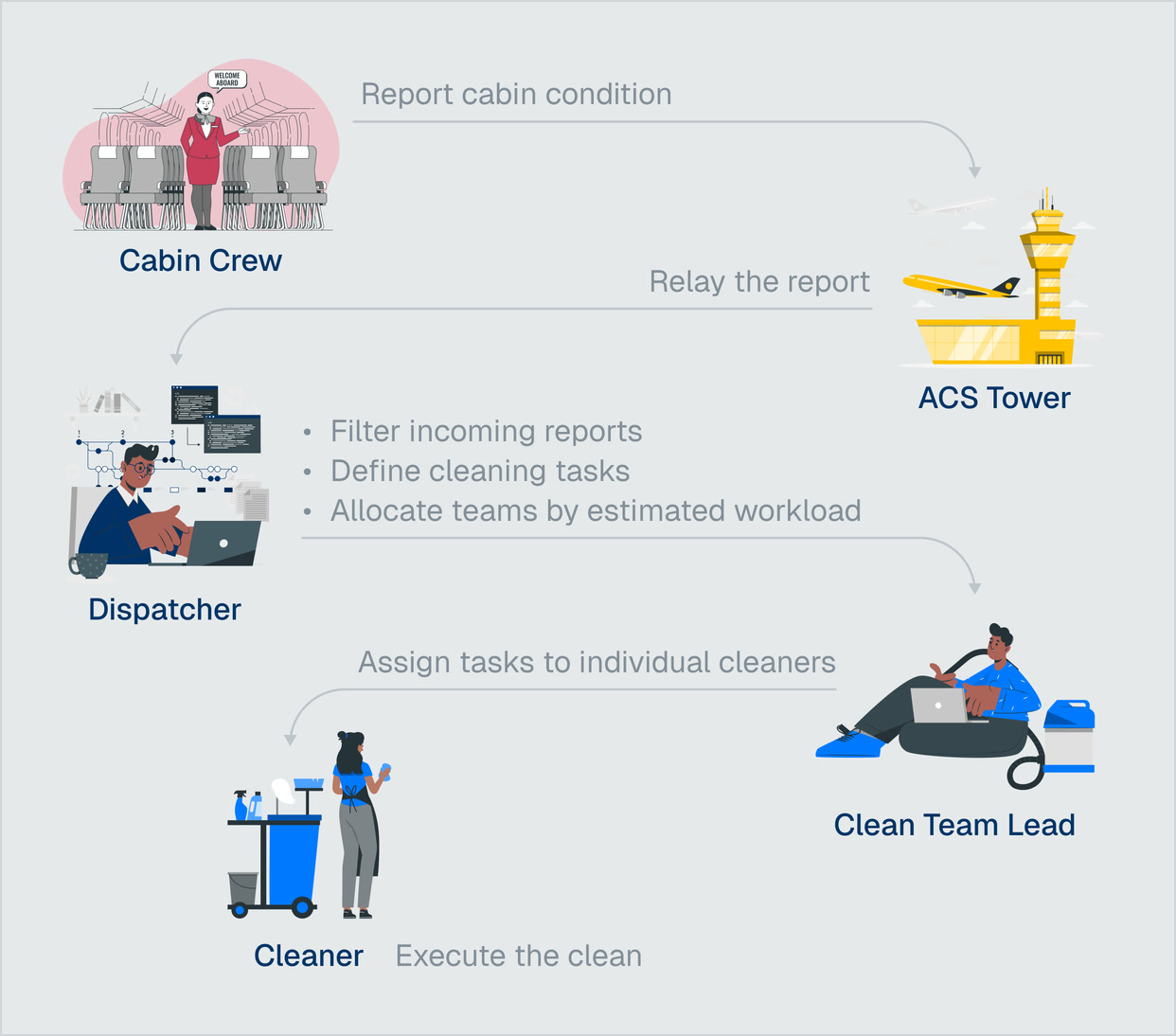
Cabin condition passes through four handoffs
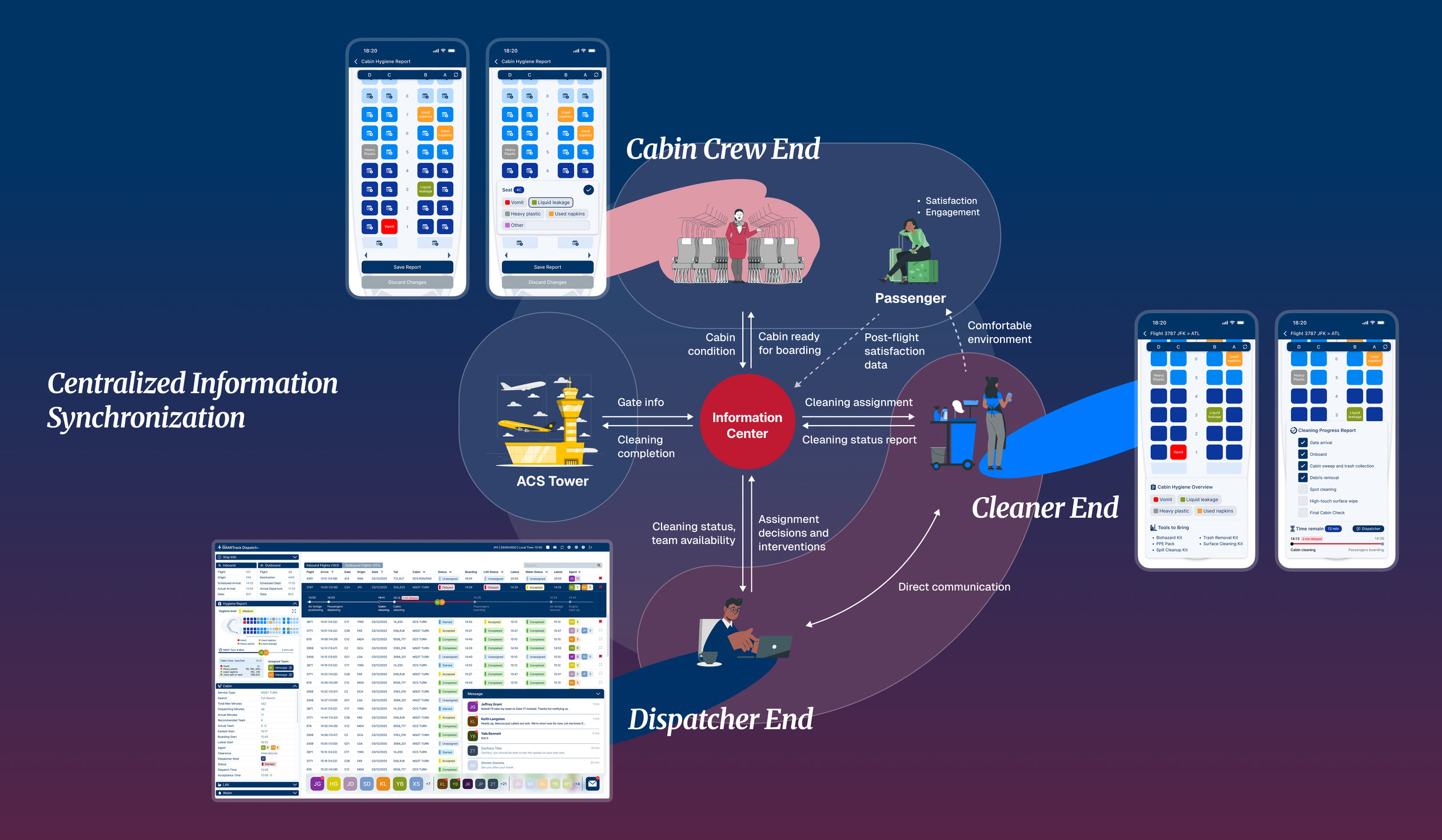
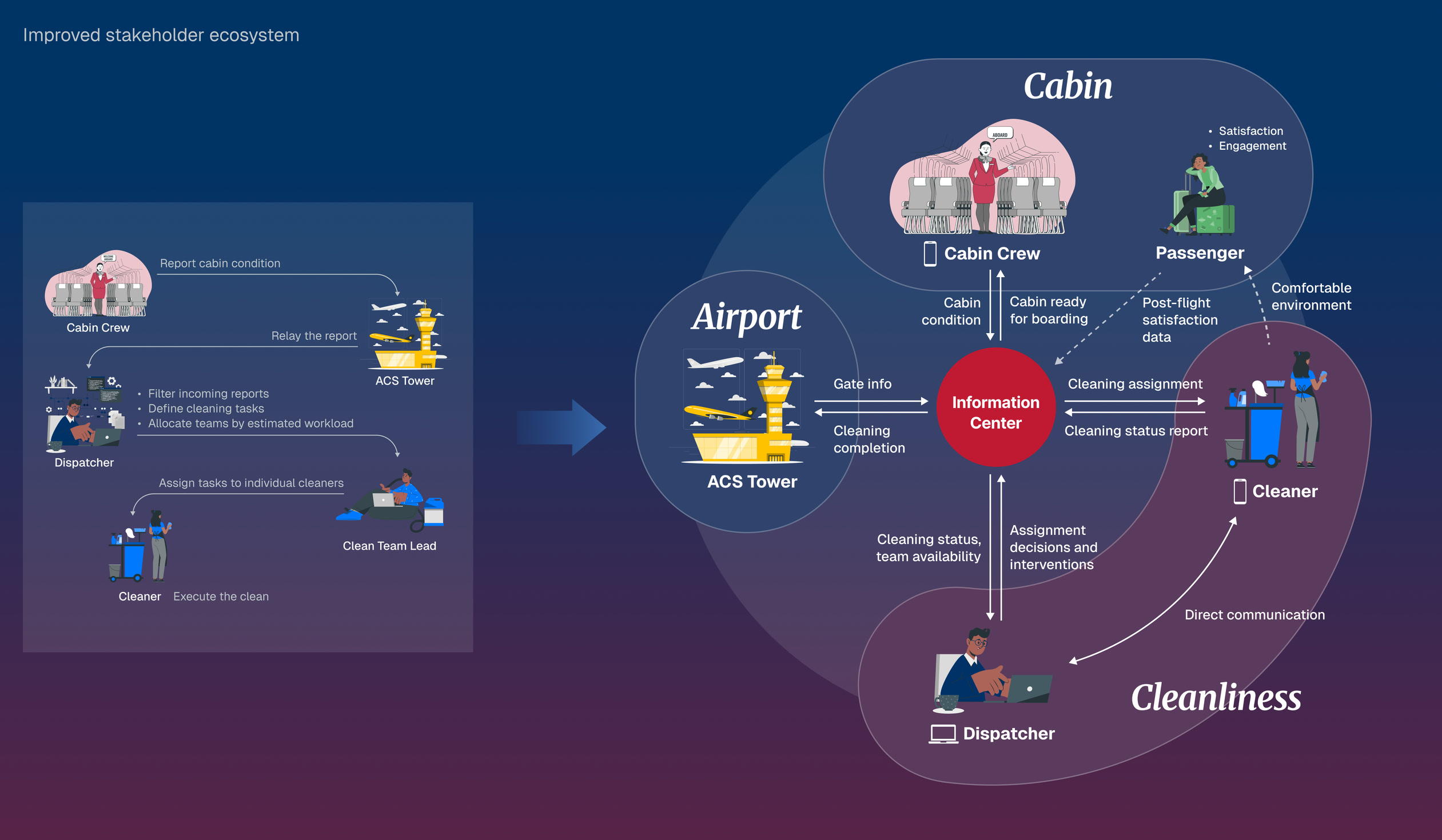
The cabin cleanliness situation is passed through the cabin crew, the ACS tower, the dispatcher, and the cleaning team lead, to reach each cleaners, so that they get the least accurate information of what they are walking into.
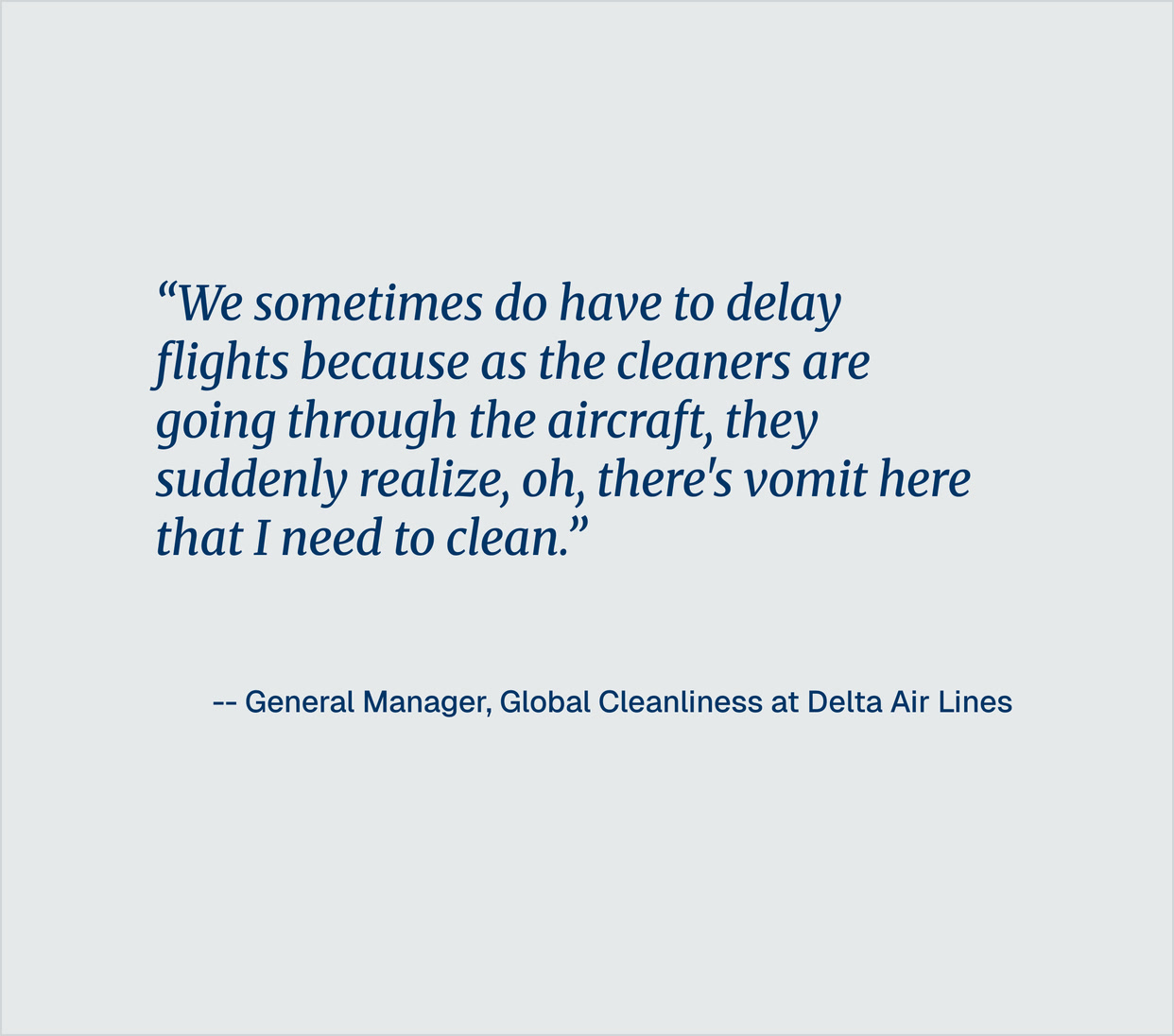
Special equipment needs are notified too late
Biohazard incidents require specific kits, and that detail often arrives after the crew is already at the gate, which means a trip back to the equipment cart when the turnaround clock is already running.
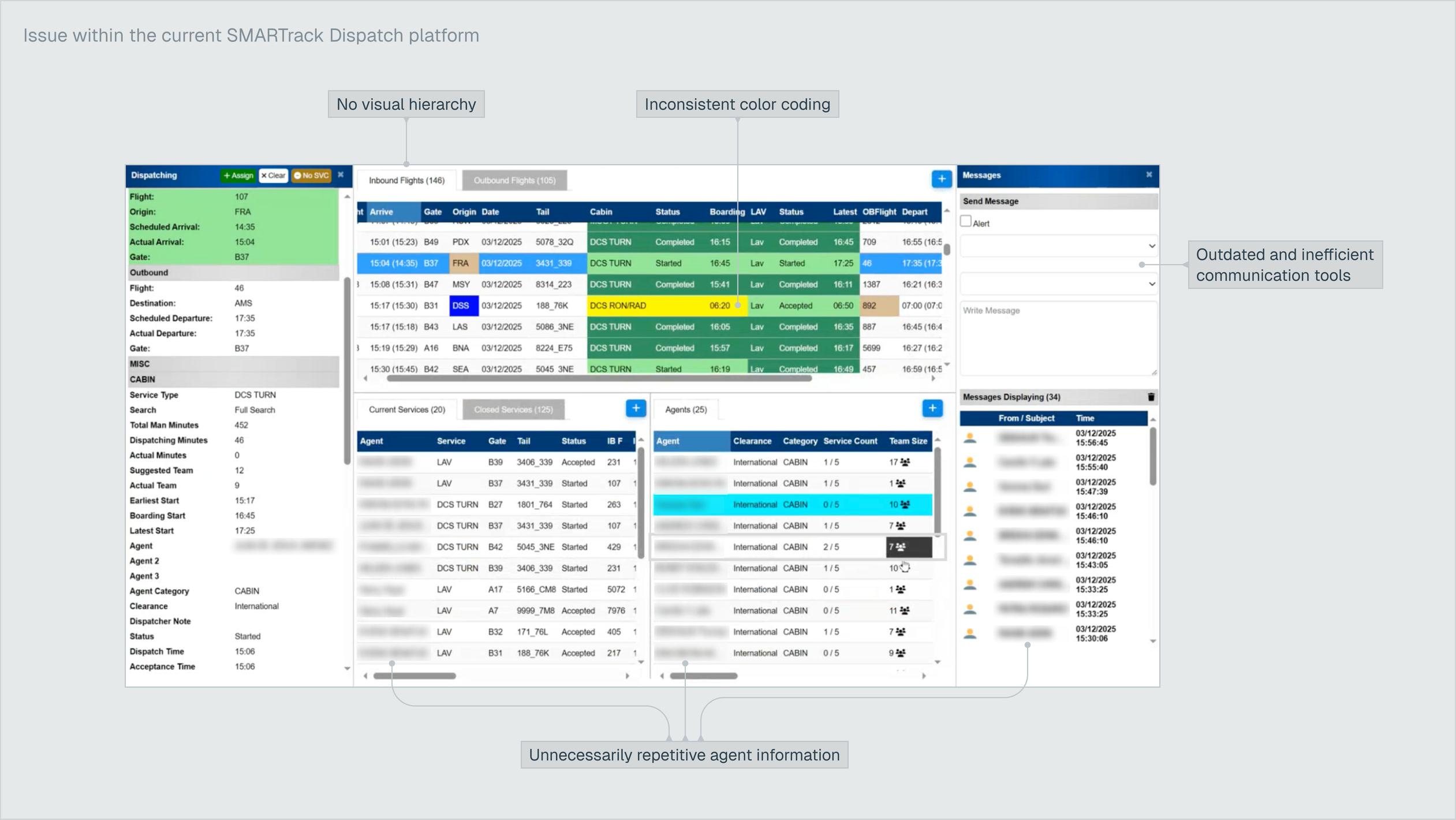
Additionally, we audited the system dispatchers already use.
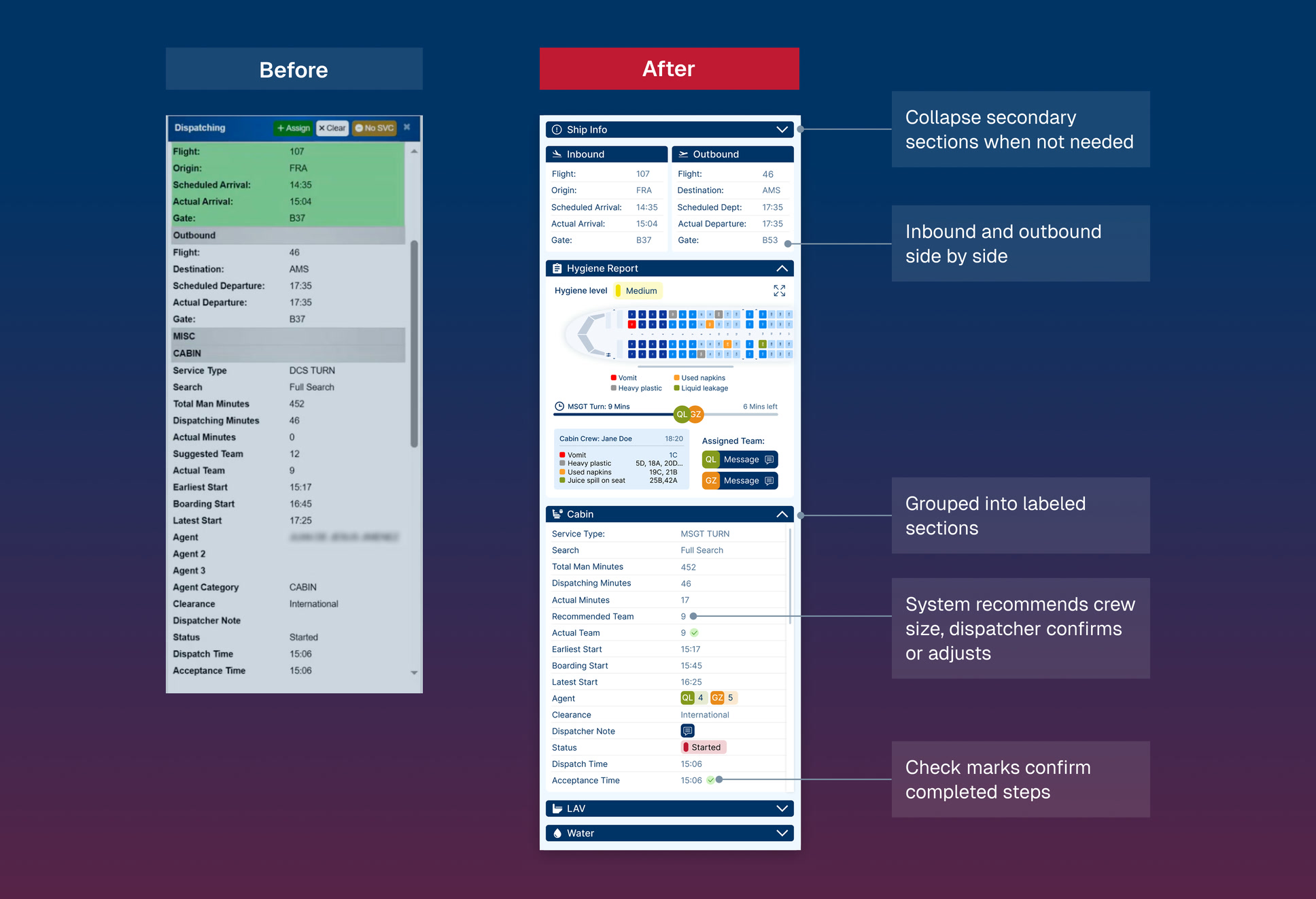
Dispatchers already work in SMARTrack Dispatch, a desktop platform for monitoring flight status, assigning cleaning teams, and messaging crews. During the walkthrough, we watched how much effort went into simply reading it. The system holds the right data but the interface makes that data expensive to retrieve, which adds seconds to decisions that happen hundreds of times a shift.
Design direction
How might we reduce turnaround time by improving cabin cleaning coordination?
Both directions build on the SMARTrack platform dispatchers already use. Instead of introducing a new workflow, we wanted to remove the guesswork and the delay from the one already in place.
Solution 01. From manual estimation to system-informed recommendation
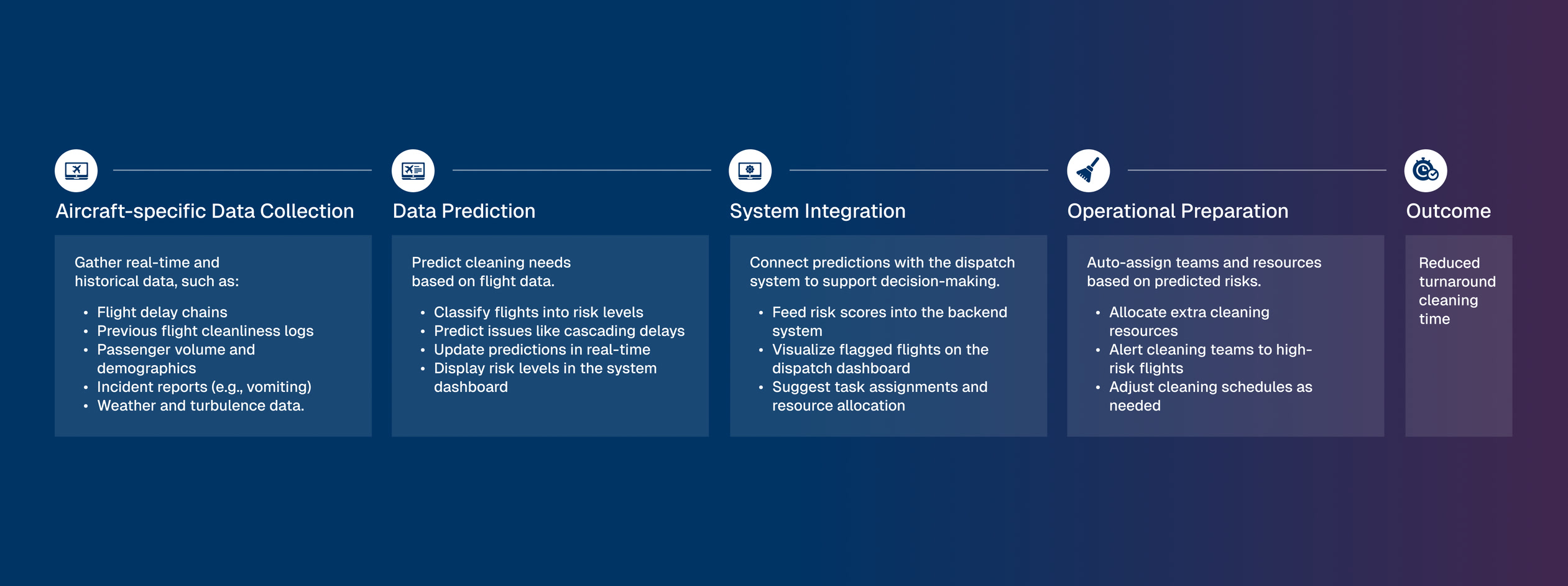
Utilizing Delta’s SkyPulse cabin monitoring system, we can collect data on route history, turnaround records, reported cabin conditions, and passenger load, and let the system forecast how many cleaners a flight likely needs and which tools to bring. The system recommends, and the dispatcher decides. With the system carrying the routine estimates, they can stay focused on the exceptions, the ones that carry real consequences if missed.
Solution 02. From linear to centralized information synchronization
Instead of relying on linear information handoffs, the existing system could serve as a centralized information hub where all stakeholders share updates and stay in sync throughout the turnaround process, so that important cabin situation are prepared ahead of time.
Impact measurement
An estimated 1~2 minutes saved for each turnaround
The system addresses two sources of lost time. Earlier information helps teams avoid late cleaning starts, such as the eight minute delay in our reference case. Better preparation and communication could then reduce cleaning duration by an estimated one to two minutes and allow more buffer for the remaining turnaround activities.
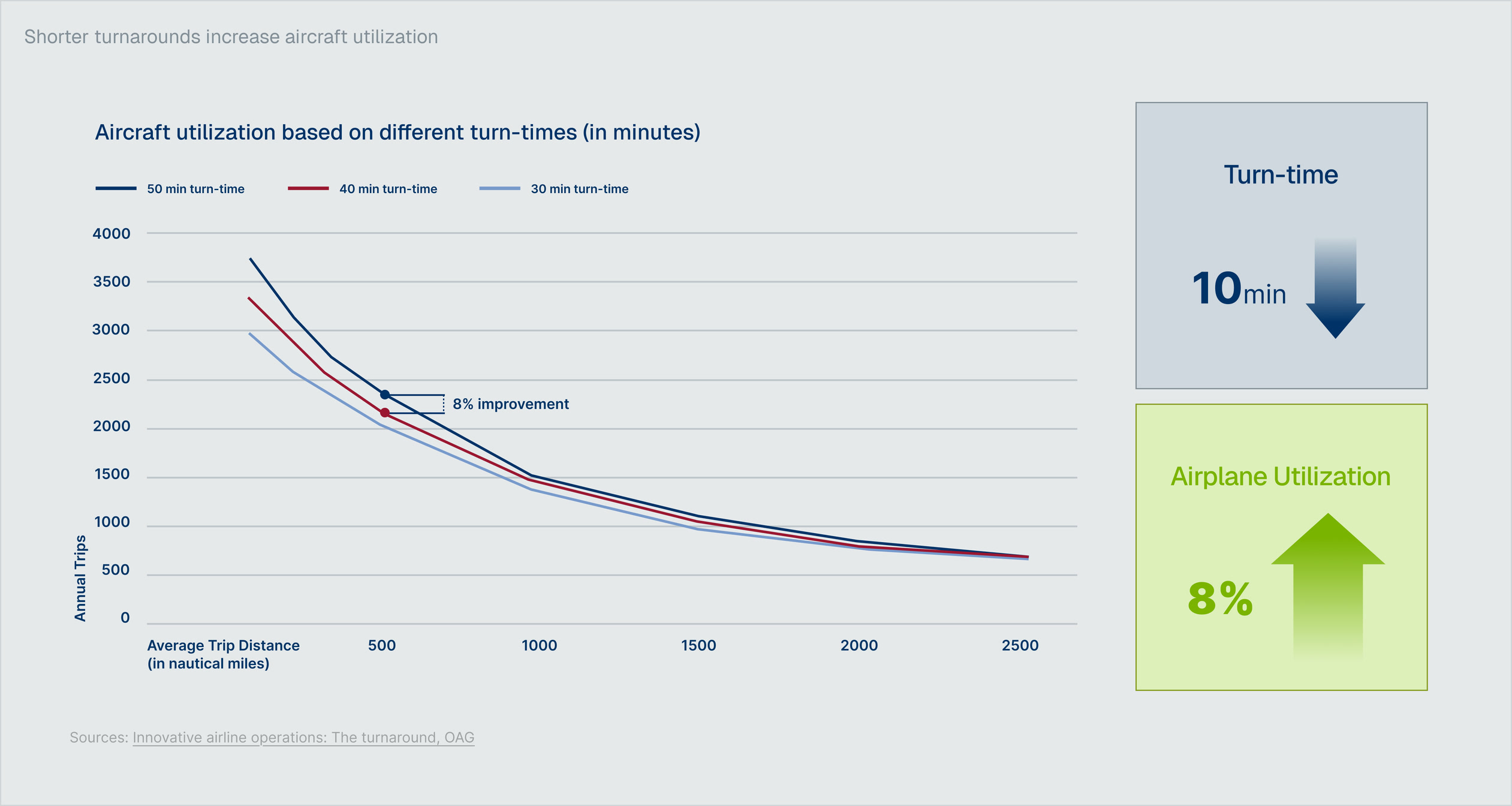
For every 10 minutes of reduction in turnaround time, the airplane utilization could be improved by 8 percent.
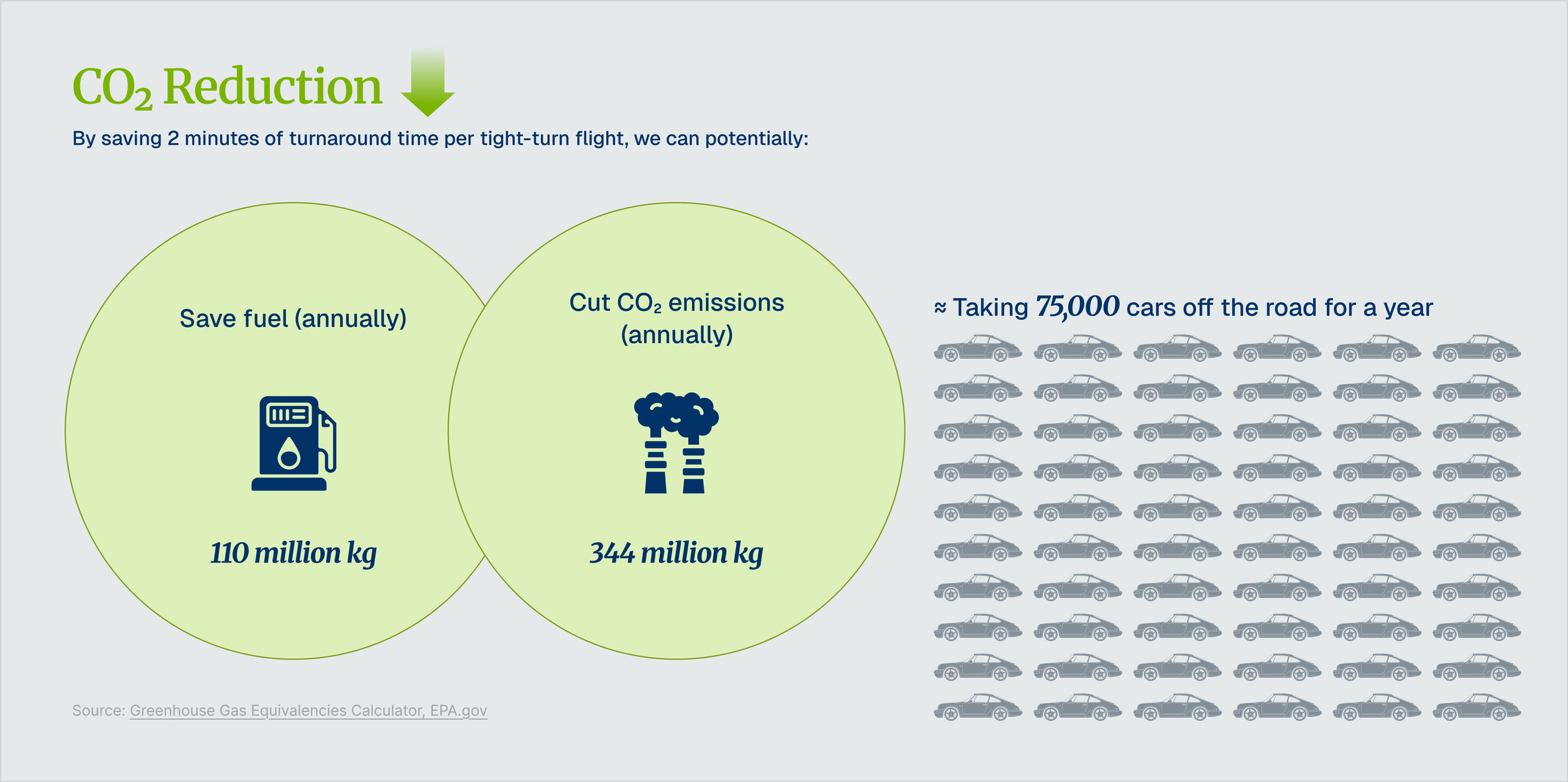
At industry scale, two minutes saved per flight could save 110 million kg of fuel burn, and avoid 344 million kg of CO₂ annually.
Beyond the operational and environmental benefits, we also aim to support people’s well-being involved in each turnaround. The design promotes more balanced workloads for cleaners, less coordination burden for dispatchers, and supports a cleaner cabin environment for cabin crew and passengers.
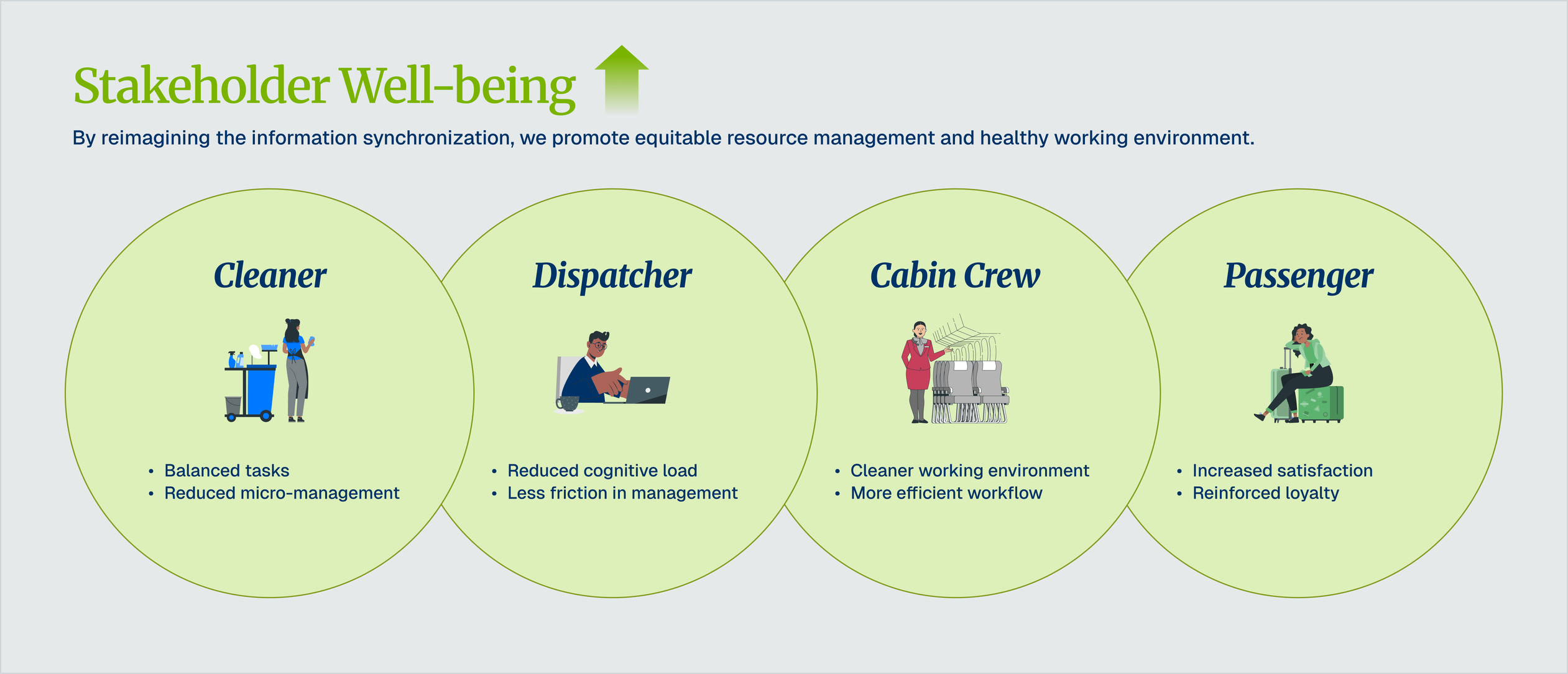
Overall, our design benefits people, planet, and profit.